

Cyriopagopus
Cyriopagopus Simon, 1887 is a genus of large theraphosid spiders in the subfamily Ornithoctoninae, distributed across tropical and subtropical Southeast Asia — Myanmar, Thailand, Cambodia, Vietnam, peninsular Malaysia, Sumatra, Borneo, and southern China, including Hainan. The genus was historically narrow, containing only a handful of described species, but successive systematic revisions over the past two decades have absorbed most of Haplopelma and large portions of Lampropelma into Cyriopagopus, making it one of the most species-rich Old World theraphosid genera currently recognized. Several additional forms circulate in the hobby under provisional locality tags (e.g. "sp. Bach Ma," "sp. Lam Dong," "sp. Nhen Dep," "sp. Valhalla") that almost certainly represent undescribed or incompletely diagnosed taxa awaiting formal treatment.
Members of Cyriopagopus are broadly divisible into two ecological strategies. The majority are obligate fossorial burrowers that excavate deep, silk-lined retreats in clay-rich or lateritic substrates of tropical forest floors; C. lividus, C. hainanus, C. minax, C. albostriatus, C. schmidti, and most Vietnamese locality forms fall into this guild. A smaller arboreal radiation — represented in the hobby by the "Sumatran Tiger" and "Valhalla / Emerald Tree Spider" forms — occupies silk-lined cavities in standing trees and bamboo. All species are ambush predators that seize invertebrate prey, and occasionally small vertebrates, from the entrance of a silk retreat. Sexual dimorphism is pronounced: adult females are bulky and long-lived (10–15+ years), whereas males are gracile, shorter-lived, and often differ markedly in coloration, a pattern that has historically complicated species-level diagnosis.
Color and pattern within the genus span a wide range. C. lividus carries a striking structural cobalt sheen, C. albostriatus and several Vietnamese forms are boldly chevron- or zebra-striped, and C. hainanus, C. schmidti, and the "Bach Ma" form trend toward warm bronze or gold over a dark ground. As a group, Cyriopagopus are defined behaviorally by speed and defensiveness. Like all Ornithoctoninae, the genus lacks urticating setae and relies instead on rapid retreat, threat-display, and, when cornered, bite as its primary defenses. Venom toxinology work on C. schmidti (and previously on species under the name Haplopelma) has characterized a suite of peptide neurotoxins — including huwentoxins and hainantoxins — of active interest in ion-channel and analgesic drug discovery; documented human envenomations have produced intense localized pain, prolonged muscle cramping, and systemic malaise, sometimes lasting days. Handling is not advised.
None of the currently described Cyriopagopus are listed on CITES, and no species has a published IUCN Red List assessment; however, most of the genus's range coincides with regions undergoing rapid deforestation, agricultural conversion, and commercial collection for the international pet trade, and several Vietnamese and Sumatran locality forms are known only from very small areas. In captivity, the fossorial species require deep substrate (commonly 8–12 in) and a starter burrow; the arboreal forms require vertical enclosures with a secure cork or bamboo retreat. Temperatures in the mid-70s to low-80s °F with moderate to high humidity approximate native conditions. Cyriopagopus is an advanced-keeper genus: long-lived, visually distinctive, taxonomically unsettled, and a useful lens through which to watch Southeast Asian theraphosid systematics continue to reorganize.
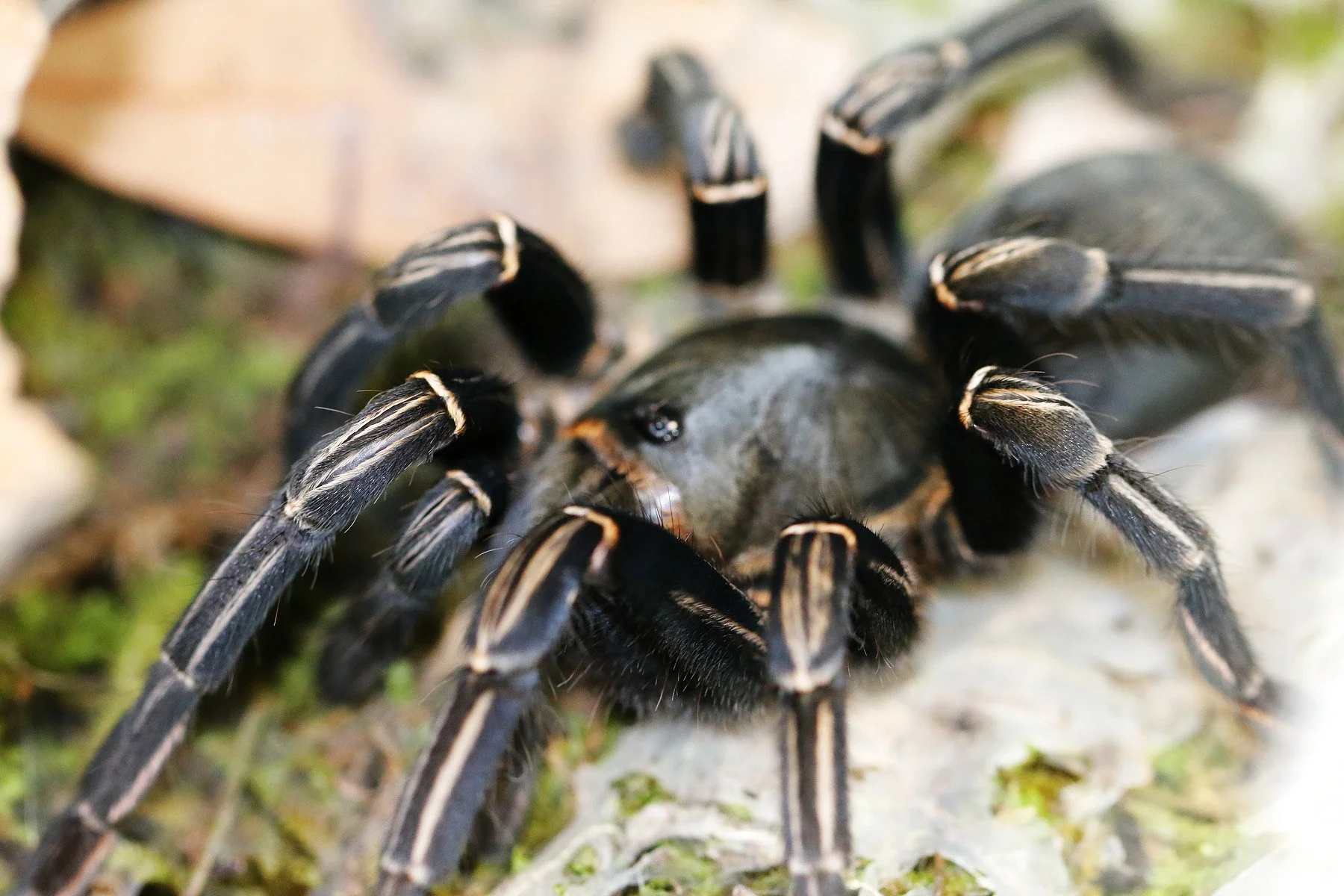
Cyriopagopus albostriatus
Thai Zebra Leg
Cyriopagopus albostriatus (Simon, 1886) is a medium-sized terrestrial theraphosid endemic to Thailand and immediately adjacent regions of Indochina. The species is diagnosed by the bold cream-to-ivory pinstripe banding running along each leg segment over a dark grey-brown ground — the source of both the scientific epithet (“albo-” white, “-striatus” striped) and the trade name “Thai Zebra Leg.” Originally placed in Melopoeus, then Haplopelma, it was moved to Cyriopagopus with the broader generic revision. It is among the more frequently encountered Asian fossorials in collections, partly because it tolerates a wider range of substrate moisture than congeners such as C. lividus.
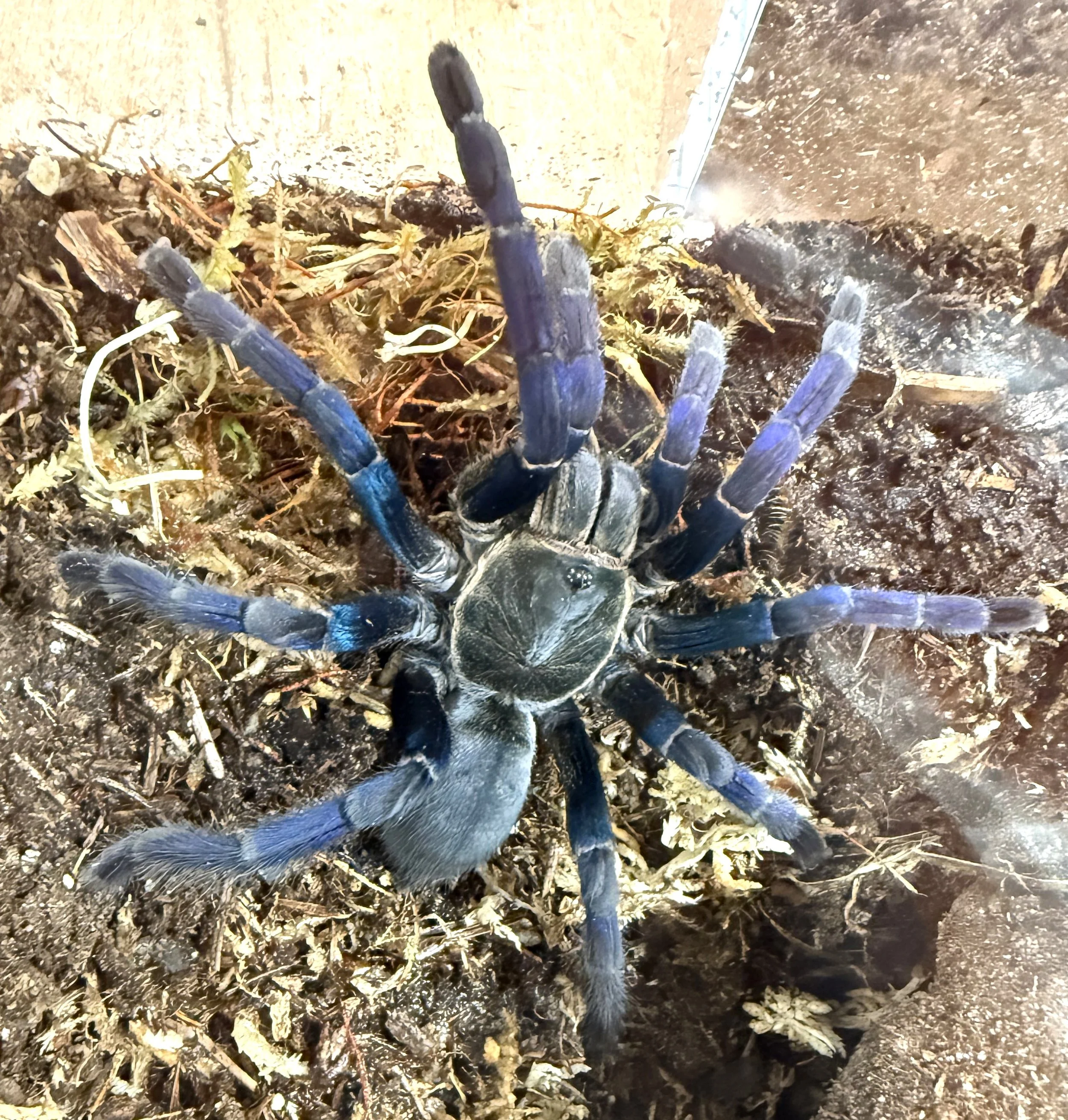
Cyriopagopus lividus
Cobalt Blue
Cyriopagopus lividus (Smith, 1996) is one of the most visually distinctive theraphosids in Southeast Asia, known for the structural cobalt-blue iridescence of the legs against a dark grey-to-black carapace and abdomen. Originally described as Haplopelma lividum, the species was transferred to Cyriopagopus following the systematic revisions that consolidated much of the former Haplopelma. It occurs in the lowland and lower montane forests of Myanmar and adjacent western Thailand, where it constructs deep, silk-lined burrows in clay-rich substrate. Like all members of the genus, C. lividus lacks urticating setae and relies on speed and a medically meaningful venom for defense.
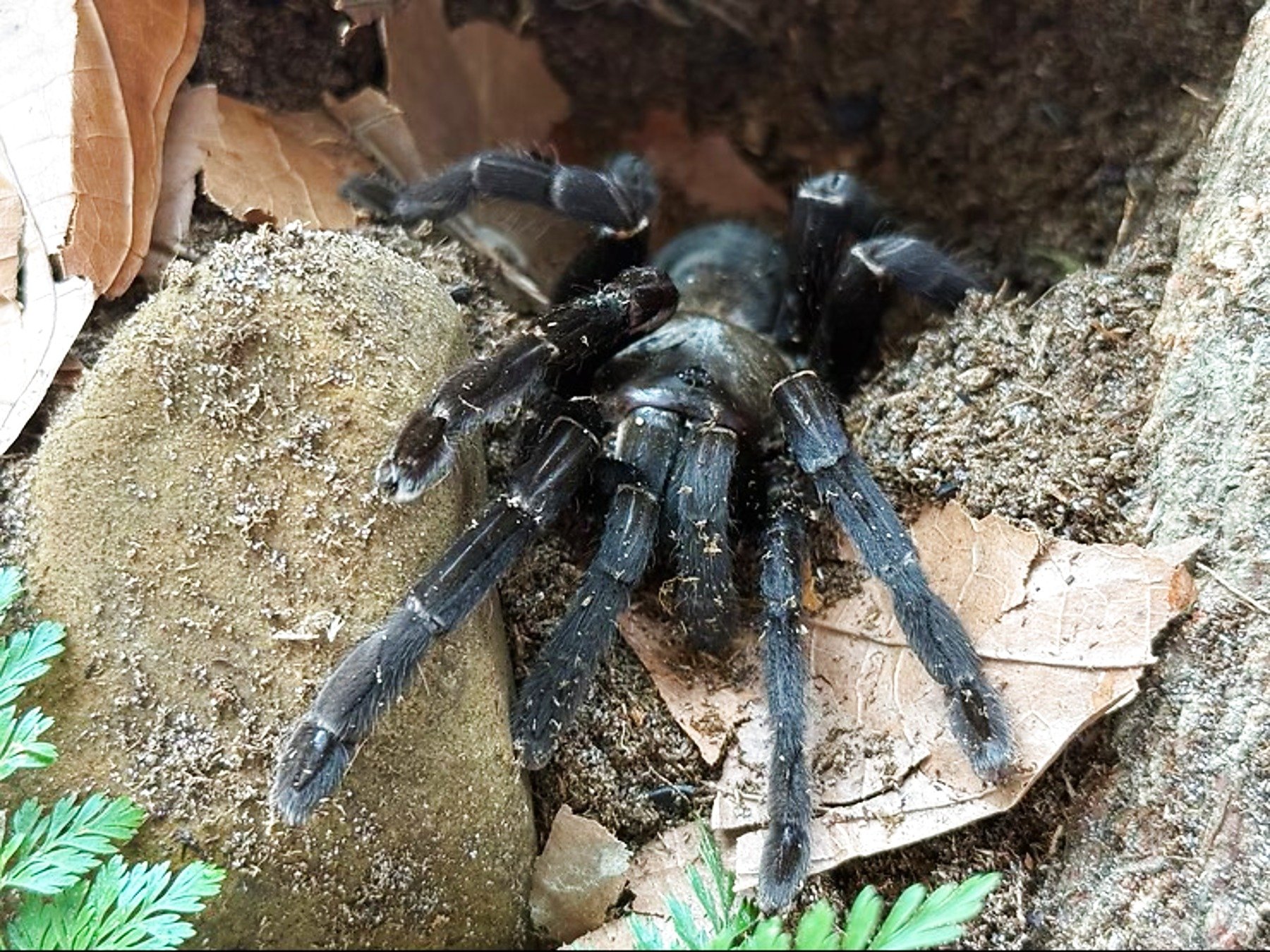
Cyriopagopus hainanus
Chinese Bird Spider
Cyriopagopus hainanus (Liang, Peng, Pan & Sun, 1999) is a large fossorial theraphosid endemic to Hainan Island in southern China, with a few unconfirmed reports from immediately adjacent mainland regions. Originally described as Ornithoctonus hainana and later transferred through Haplopelma, the species now sits in Cyriopagopus. Adults are uniformly bronze-to-charcoal with subtle metallic tones on the carapace and very faint femoral striping in some specimens. Beyond the hobby, C. hainanus is one of the best-studied Asian theraphosids in venom toxinology: the hainantoxins (HNTX-I through HNTX-V) isolated from this species are widely used as molecular tools for sodium-channel research and have been investigated as templates for analgesic drug development.
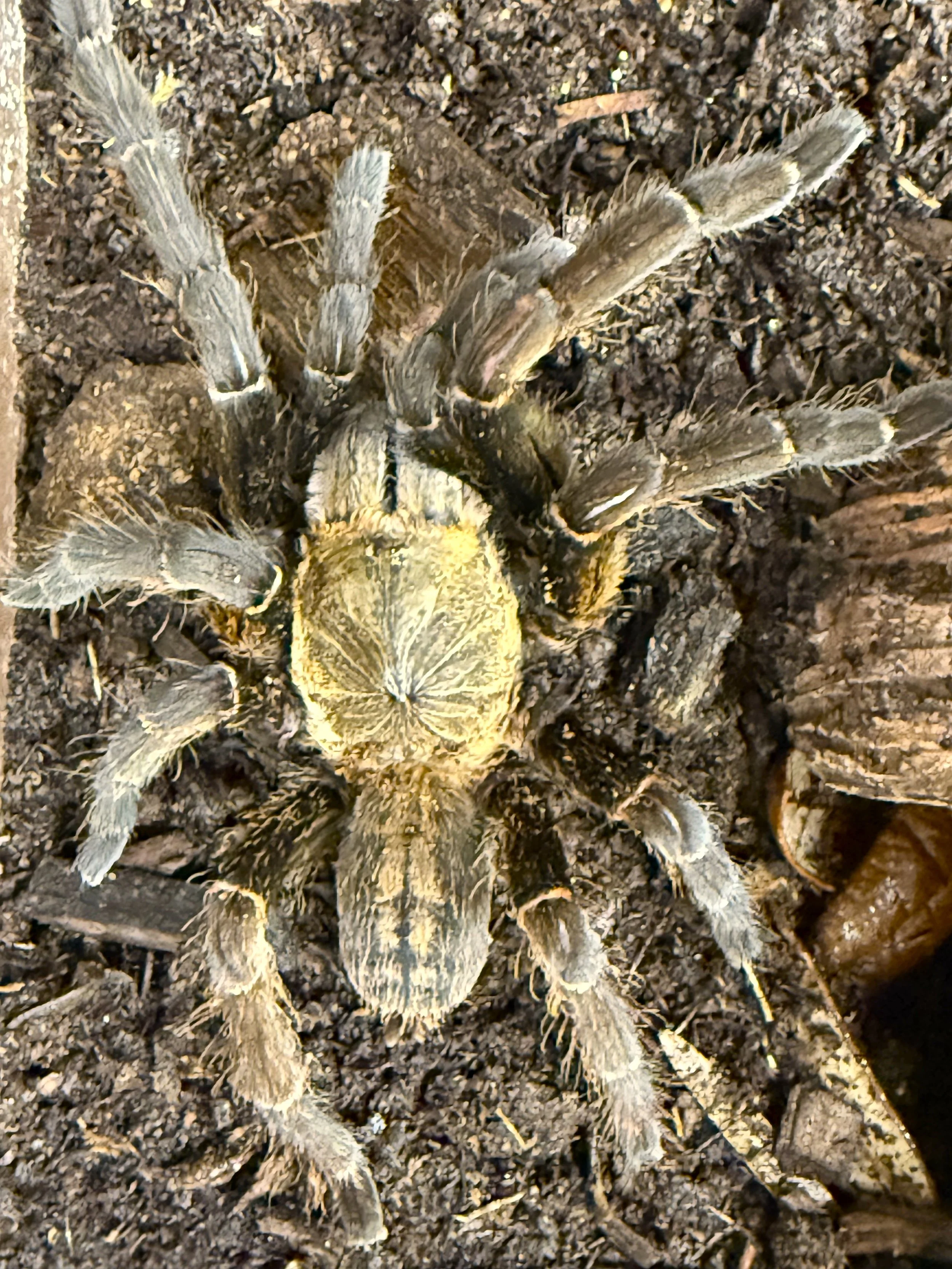
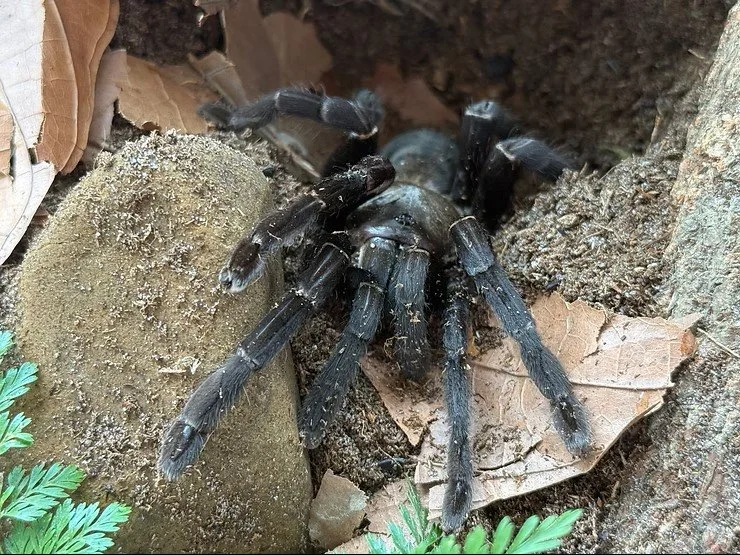
Cyriopagopus sp. “Bach Ma”
Bach Ma Earth Tiger
Cyriopagopus sp. “Bach Ma” is an undescribed Vietnamese trade form sourced from material collected in or near Bach Ma National Park (Thừa Thiên Huế province, central Vietnam). The form has not been formally described and current expert consensus places it within or close to the Vietnamese C. schmidti/C. longipes radiation pending integrative morphological and molecular work. Adults circulate in the international hobby with the typical Vietnamese earth-tiger phenotype — chocolate-dark base with subtle leg-banding — and the form is part of the broader wave of Vietnamese karst-edge Cyriopagopus material that has entered the European hobby since the late 2010s.