
Lasiocyano

Lasiocyano is an accepted genus of theraphosid tarantulas established in 2023 by Galleti-Lima, Hamilton, Borges, and Guadanucci. It is currently monotypic, with the sole accepted species Lasiocyano sazimai, which is also the type species by monotypy. The World Spider Catalog records the genus as containing only this single Brazilian species.

The genus was erected as part of a broader phylogenomic reclassification of South American lasiodoriform theraphosids. In that 2023 study, Pterinopelma sazimai was transferred to the new genus Lasiocyano, reflecting both molecular evidence and diagnostic morphology. The authors explicitly derived the generic name from “lasio” meaning hairy and “cyano” meaning blue, in reference to the conspicuous blue iridescent setae of the type species.

In scientific terms, Lasiocyano is best understood as a geographically restricted Brazilian highland theraphosid lineage associated with the Espinhaço Mountain Range, including records from Bahia and Minas Gerais. The 2023 reclassification summarized the species’ distribution as the highlands of the Espinhaço range, while the original and subsequent taxonomic papers place specimens in Chapada Diamantina and Serra do Cipó.
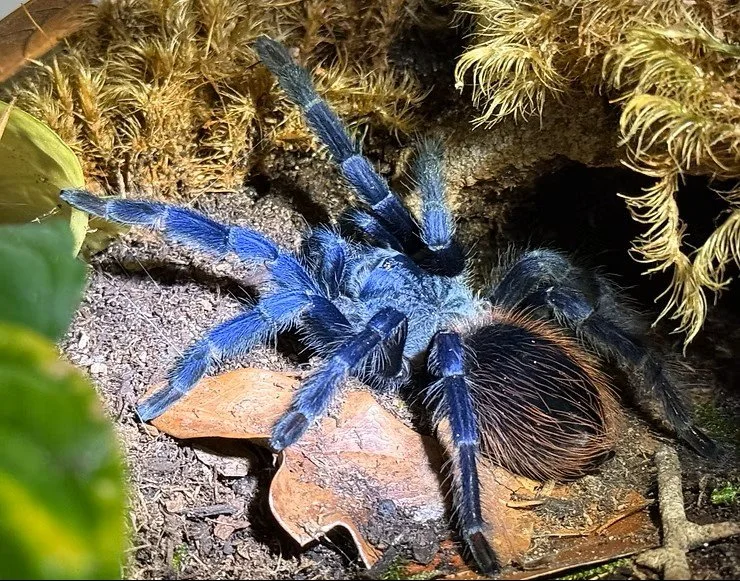
Lasiocyano sazimai

Lasiocyano sazimai is the sole species of Lasiocyano and the nominal species on which the genus is based. It was originally described in 2011 by Bertani, Nagahama, and Fukushima as Pterinopelma sazimai, and remained in that genus until its transfer to Lasiocyano in 2023. The World Spider Catalog currently lists the species as accepted and distributed in Brazil.

The species is particularly important taxonomically because it illustrates both the instability and refinement of recent South American theraphosid systematics. The 2023 phylogenomic revision treated it as sufficiently distinct from Pterinopelma to warrant placement in its own monotypic genus, while also identifying a set of diagnostic characters including the absence of stridulatory setae on coxa I, the absence of long setae on the carapace, the presence of type III urticating setae, and the characteristic blue or purple iridescent covering of the carapace, chelicerae, and legs.

Common name: No universally standardized scientific common name; in hobby use it is commonly called the Brazilian Blue or Brazilian Iridescent Blue.
Origin: Brazil.
Natural habitat: Highland campo rupestre habitat in the Espinhaço Mountain Range, including Chapada Diamantina and Serra do Cipó.
Lifestyle: Ground-dwelling theraphosid associated with rocky highland environments; juveniles have been documented under rocks, and the species is generally interpreted as terrestrial to opportunistic fossorial.
Adult size: Medium-sized theraphosid; standardized mature legspan values are not synthesized in the primary taxonomic literature.
Growth rate: Not standardized in the formal taxonomic literature.
Temperament: No formal behavioral diagnosis exists; captive behavioral descriptions are largely hobby-derived rather than taxonomic.
Color & appearance: Carapace, chelicerae, and legs are covered with blue to purple iridescent setae that can vary into darker shades; this coloration is one of the defining external features of the species.

Species History

Lasiocyano sazimai entered the literature in 2011 as Pterinopelma sazimai. The original description was based on female material from Bahia and additional material from Minas Gerais, and the species was named in honor of the Brazilian zoologist Ivan Sazima, who had collected exemplars decades earlier. The current catalog records that original combination and the later transfer into Lasiocyano in 2023.

Its subsequent taxonomic history is especially important because the original male attributed to P. sazimai was later shown to be misidentified. In 2016, Bertani and Leal described the true male of P. sazimai and clarified that the male illustrated in the 2011 paper actually belonged to another species, later recognized as Parvicarina felipeleitei. The World Spider Catalog explicitly notes this correction in the species record.

The 2023 phylogenomic revision then removed the species from Pterinopelma and established Lasiocyano as a new monotypic genus for it. In that framework, L. sazimai became not only the sole species of the genus but also the reference point through which the genus is defined. This makes the species central to the modern taxonomy of the group.

Natural Habitat

Published locality and habitat data place Lasiocyano sazimai in Brazilian highland campos rupestres of the Espinhaço Mountain Range. The original description states that specimens were collected in campo rupestre areas above 900 meters above sea level, including the type locality in Chapada Diamantina at 1,262 meters and habitat imagery from about 1,300 meters.

These rocky highland environments are characterized by shallow soils, extensive outcropping, and a distinctive montane vegetation mosaic. The original description documented juveniles under rocks during the day, while the female holotype was observed crossing a trail in the afternoon. Later work on the true male and sympatric related species confirmed that L. sazimai is part of the theraphosid fauna of the campos rupestres of the Espinhaço range.

In husbandry terms, that scientific record is most consistent with a terrestrial enclosure that provides secure retreats, structurally stable substrate, and dry-to-moderately moist lower layers without stagnant conditions. Because the formal natural-history record is still limited, those husbandry implications are best understood as conservative inferences from the documented rocky highland habitat and field observations rather than from a dedicated ecological monograph.

Our Specimen

Coming soon