

Pseudhapalopus
Pseudhapalopus Strand, 1907 is a small Neotropical genus of dwarf theraphosids within the subfamily Theraphosinae, distributed across northern South America, with records from Colombia, Venezuela, Trinidad, and adjacent regions. Recognized species include P. trinitatus, P. aculeatus, and P. spinulopalpus, together with several hobby forms commonly designated P. sp. blue and similar.
Members of Pseudhapalopus are small-bodied opportunistic spiders that occupy silk-lined cavities beneath stones, within rock crevices, and in pre-existing burrows in primary and secondary humid lowland forest. Adult leg span typically reaches 2.5 to 3.5 inches. The integument frequently displays vivid structural coloration — most notably the cobalt-blue legs and contrasting carmine opisthosomal setae of P. sp. blue, which has secured the form considerable hobbyist attention.
As New World theraphosines, the genus possesses urticating setae and deploys them defensively, but the comparatively small body size limits the practical defensive impact. Venom is of no documented medical significance, and temperament is generally described as alert but non-aggressive. Growth rates are notably rapid for a small theraphosid, with females attaining maturity in approximately two years.
The genus is of taxonomic interest as a focal point of ongoing efforts to clarify the phylogenetic boundaries of small Neotropical theraphosines, and additional species transfers are anticipated as molecular evidence accumulates. Captive husbandry is straightforward, with modest enclosure size, ample refuge structure, moderate humidity, and stable warm temperatures sustaining long-term success.
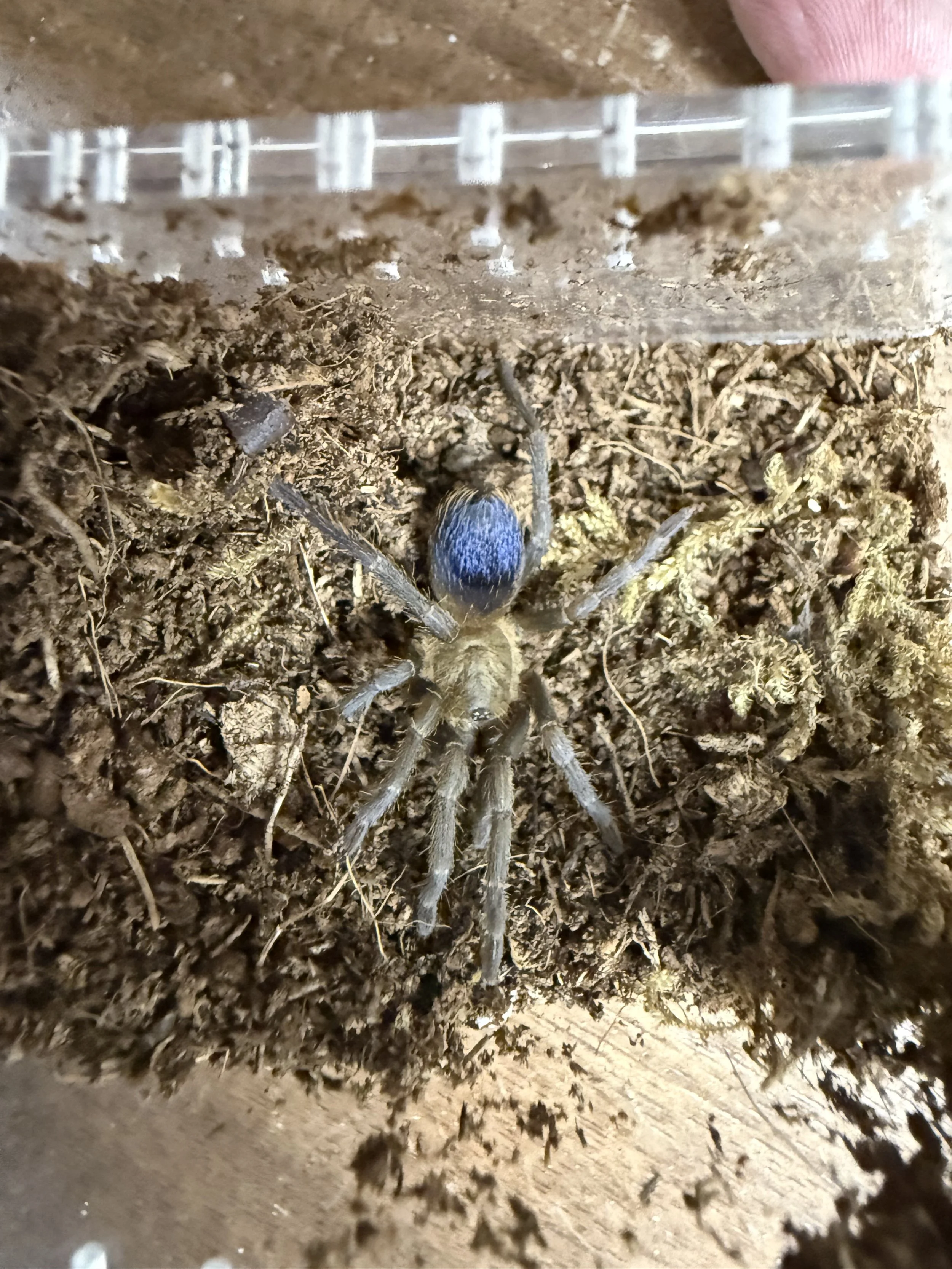
Pseudhapalopus sp. "Colombia"
Colombian Dwarf Beauty
Pseudhapalopus is a small-bodied Neotropical genus of uncertain subfamilial placement — historically assigned to Ischnocolinae, with more recent morphological work supporting affinities within Theraphosinae. Pseudhapalopus sp. “Colombia” is an undescribed Colombian trade form that has persisted in hobby culture for more than a decade without formal taxonomic resolution. Material is small-bodied, fast, and semi-fossorial.
Replace this block with an <img class="luxe-ag-photo" src="…" alt="…">
Pseudhapalopus sp. "Blue"
Blue Dwarf Beauty
Pseudhapalopus sp. “Blue” is an undescribed Neotropical dwarf theraphosid currently circulating in the trade without a formal specific epithet. Assigned to Pseudhapalopus on the basis of general morphology, with the same caveats around subfamilial placement that apply to the genus as a whole (historically Ischnocolinae; more recently regarded as Theraphosinae). Distinguished from Pseudhapalopus sp. “Colombia” by a subtle metallic blue sheen visible in good light.