

Davus
Davus O. Pickard-Cambridge, 1892, is a small Central American genus of dwarf- to medium-bodied Theraphosinae, restored as a valid genus by Peñaherrera-R., Guadanucci, Bertani & Pinto-da-Rocha (2018, Zootaxa 4407) after a long period of synonymy under Cyclosternum. The 2018 revision separated Cyclosternum as a more narrowly defined South American genus and reactivated Davus to accommodate the Central American congeners that had accumulated under the Cyclosternum umbrella through the 20th century. The recognized post-2018 Davus contains a small set of valid species (D. fasciatus, D. pentaloris, D. ruficapillus, and a handful of congeners) plus a number of undescribed Central American "Tigerrump" trade forms that are likely to receive formal attention as the descriptive work on Central American Theraphosinae continues.
Members of the genus are small-to-medium-bodied terrestrial Theraphosinae: adult females typically 3.5–4 in diagonal leg span, obligately fossorial, with the densely silk-lined burrow construction characteristic of the Central American Theraphosinae more broadly. Adult coloration is consistent across the genus and forms the basis of the "Tigerrump" trade name applied to most members: chocolate-brown body and carapace with strongly contrasting tiger-stripe banding on the dorsal opisthosoma and a heart-shaped, pale dorsal cardiac mark. The species are externally similar enough that reliable separation depends on characters of the spermatheca and male palpal bulb visible only on prepared specimens, and on biogeographic context (Costa Rica/Nicaragua for D. fasciatus, Guatemala/Mexico for D. pentaloris, Panama for the trade form sp. "Panama").
Behaviorally, Davus pattern with the rest of the small-bodied Central American Theraphosinae: reclusive and flight-dominant on disturbance, with infrequent and brief threat displays; Type I urticating setae kicked when persistently disturbed, but the small body size limits the practical defensive dose; venom mild and bites sparsely documented. The genus is well suited for keepers transitioning from larger Theraphosinae to dwarf species and is comparatively undemanding within the captive husbandry envelope. Captive husbandry requires 4–5 in of moist substrate maintained primarily via a moist substrate base, a cork retreat or pre-started burrow, mid-70s to low-80s °F, and moderate-to-high humidity (~70–80%) with adequate cross-ventilation. The genus tolerates the warm, humid lowland conditions of Central America across its native range and is among the more forgiving small-bodied Theraphosinae in captivity.
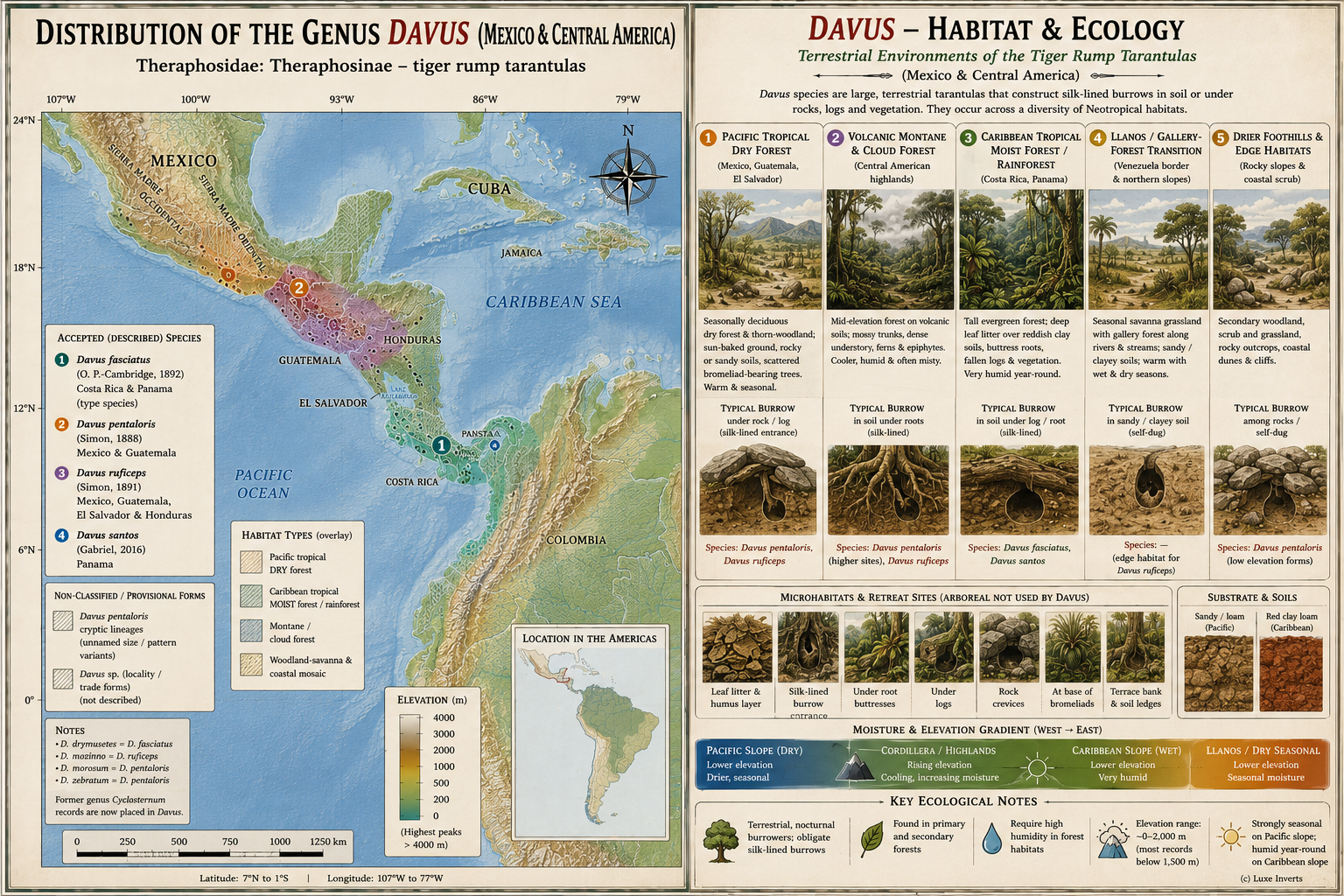
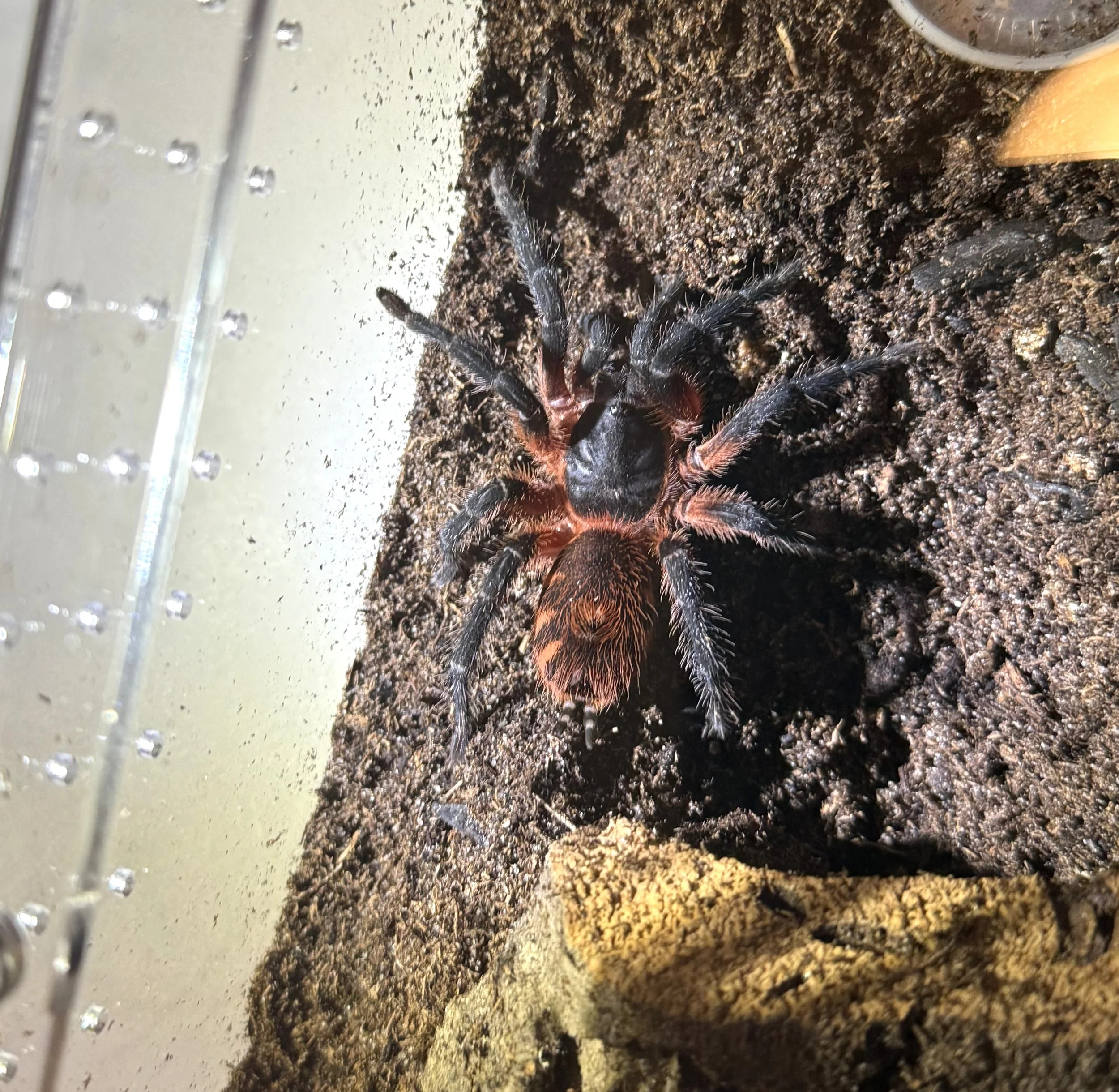
Davus sp. Panama
Panamanian Tigerrump
Davus sp. Panama is an undescribed Central American theraphosine traded in the hobby under a locality tag rather than a species epithet. The genus Davus O. Pickard-Cambridge, 1892 was reactivated by the Peñaherrera-R. et al. 2018 revision (Zootaxa 4407) on the basis of male palpal bulb shape, spermathecal morphology, and characteristic patterning of urticating setae, and current Panamanian material in the hobby keys to that redefined concept of Davus while remaining distinct from formally named congeners such as D. pentaloris and D. fasciatus. In life this lineage tends to show a warmer, more reddish-brown base color and crisper, higher-contrast tigerstripe banding on the abdomen than typical D. pentaloris, with proportionally fine paramedian carapace markings and lightly bronzed setation. As with other Davus, it is a compact, web-heavy, fossorial dwarf with a notably calm disposition for a Central American New-World terrestrial, and it has become a popular “next step” species for keepers ready to move from arid New-World beginners onto a moisture-dependent setup.
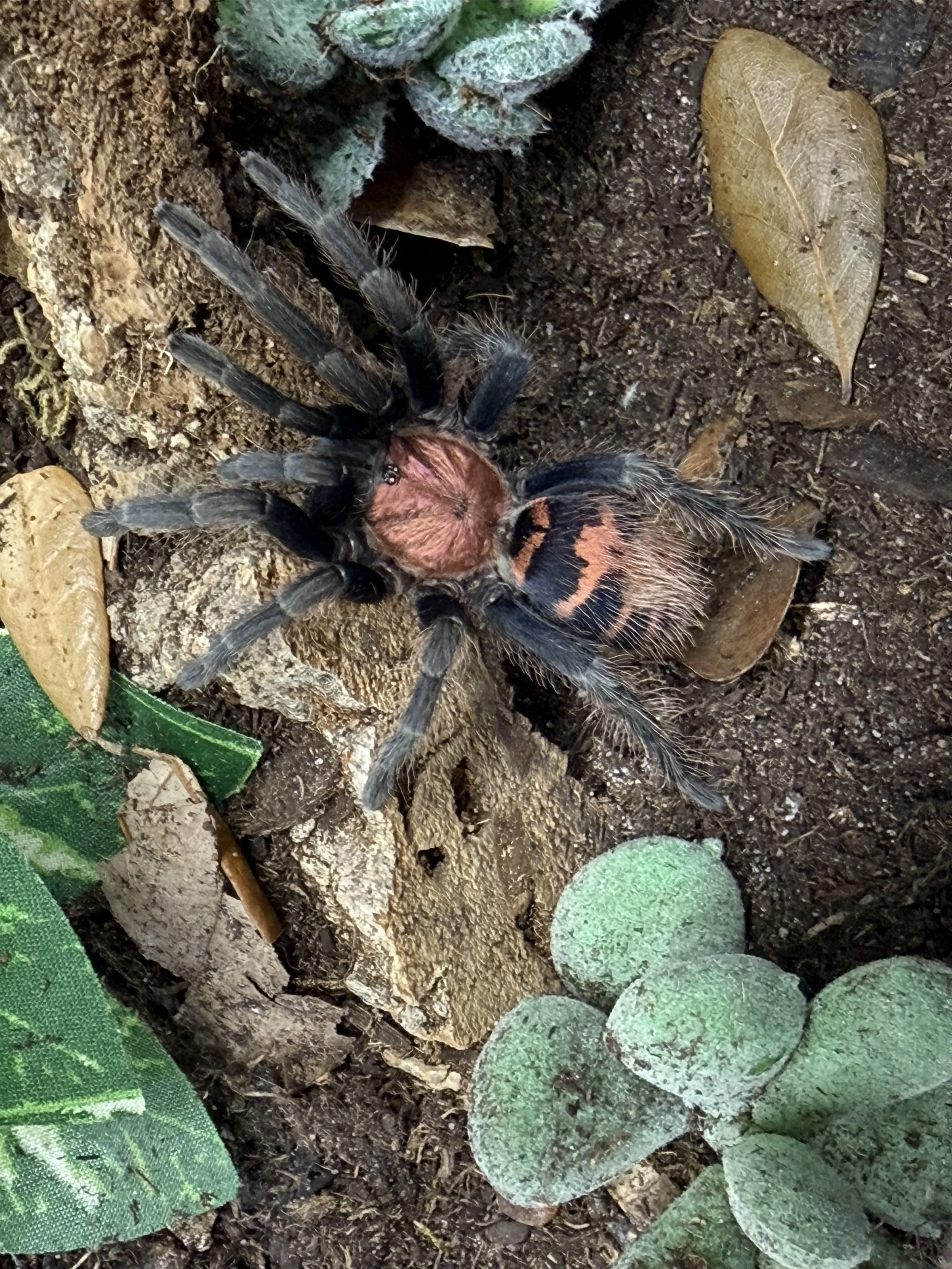
Davus pentaloris
Guatemalan Tigerrump
Davus pentaloris (Simon, 1888) is a small Central American theraphosine originally described in Cyclosternum from Guatemalan material and shifted to the reactivated genus Davus by the Peñaherrera-R. et al. 2018 revision (Zootaxa 4407), which redefined the genus on a combination of male palpal bulb morphology, spermathecal shape, and patterning of urticating setae. The species is the principal Guatemalan and Mexican-Pacific-slope “Tigerrump” in the hobby and is reliably separated from its sister species D. fasciatus by genitalic characters visible only on prepared specimens, and externally by a more diffuse tigerstripe banding pattern with finer paramedian markings on the carapace and a subtler, more chocolate-toned base color. In captivity it is prized for its compact adult size, willingness to webbing, and an unusually placid disposition for a fossorial New World species, which together make it one of the more accessible “starter dwarfs” once a properly moist enclosure is established.