
Caribena
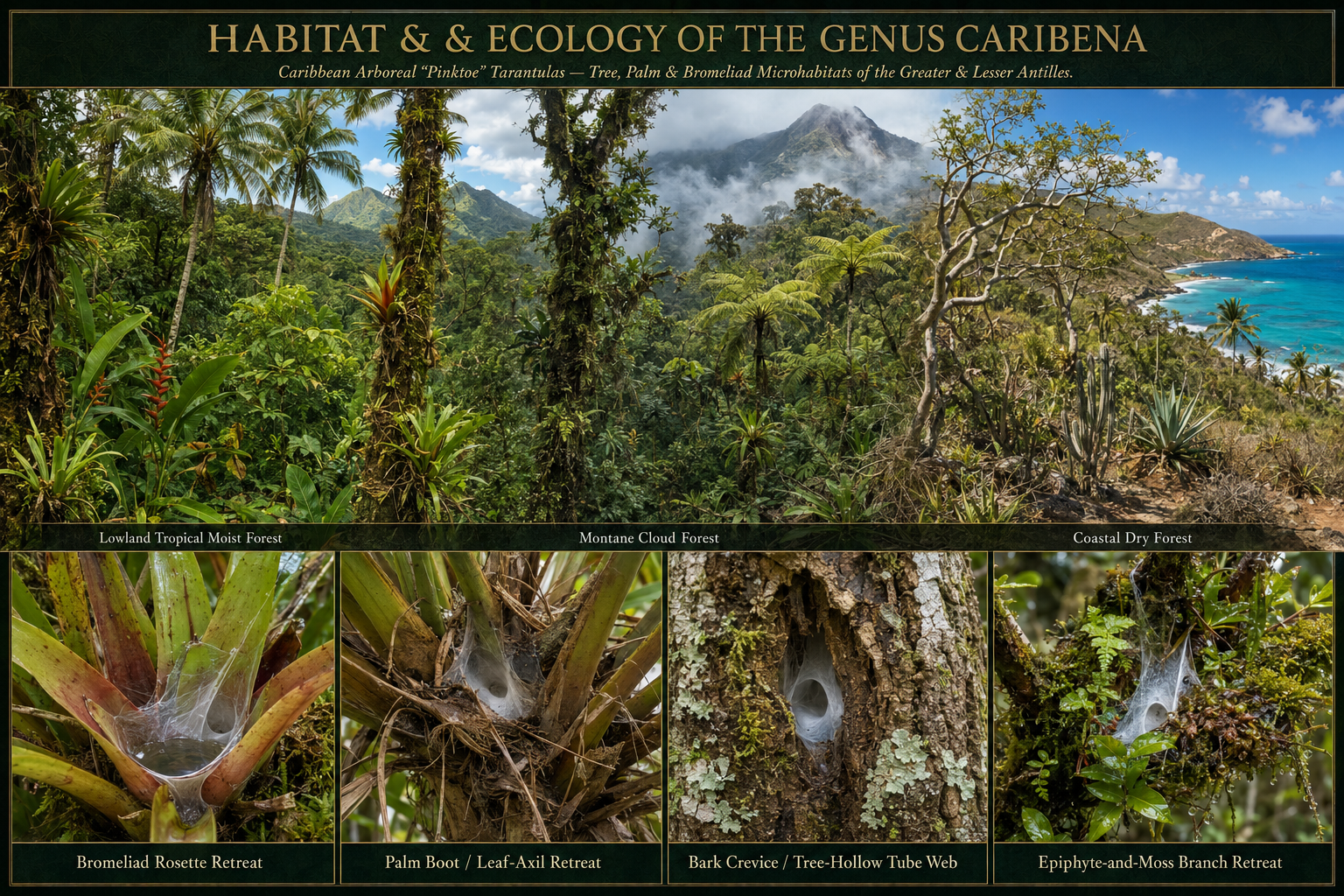
Caribena Fukushima & Bertani, 2017 is a small Aviculariinae genus erected for the Lesser Antillean arboreal pinktoes long parked under Avicularia. The genus was carved out in the same comprehensive revision (ZooKeys 659: 1–185) that redescribed the type species, Avicularia avicularia, from a neotype, narrowed the surviving Avicularia to 12 valid species, and erected or restored the sister genera Caribena, Iridopelma, Pachistopelma, and Ybyrapora. As currently constituted, Caribena contains two valid species — C. versicolor (Walckenaer, 1837), the famous Antillean Pinktoe of Martinique and Guadeloupe, and C. laeta (C. L. Koch, 1842), described from Puerto Rico and adjacent — making it the smallest of the post-2017 Aviculariinae generic splits and the only one restricted to Caribbean island endemics.
Diagnostically, the Caribena pattern with the rest of the Aviculariinae: arboreal habit, tubular silken retreats in tree hollows and bromeliad whorls, Type II urticating setae rubbed onto a threat by direct opisthosomal contact rather than kicked, and the flight-dominant drop reflex on disturbance characteristic of the subfamily. Caribena is distinguished from Avicularia primarily by features of the male palpal bulb and female spermatheca diagnostic on prepared specimens, and from Iridopelma and Ybyrapora by adult coloration patterns and biogeographic distribution. The genus is otherwise behaviorally and ecologically equivalent to its mainland sisters, with the same SADS-style husbandry sensitivities — sustained substrate saturation in a poorly-ventilated enclosure is the principal cause of unexplained adult mortality, and cross-ventilation rather than added humidity is the standard fix.
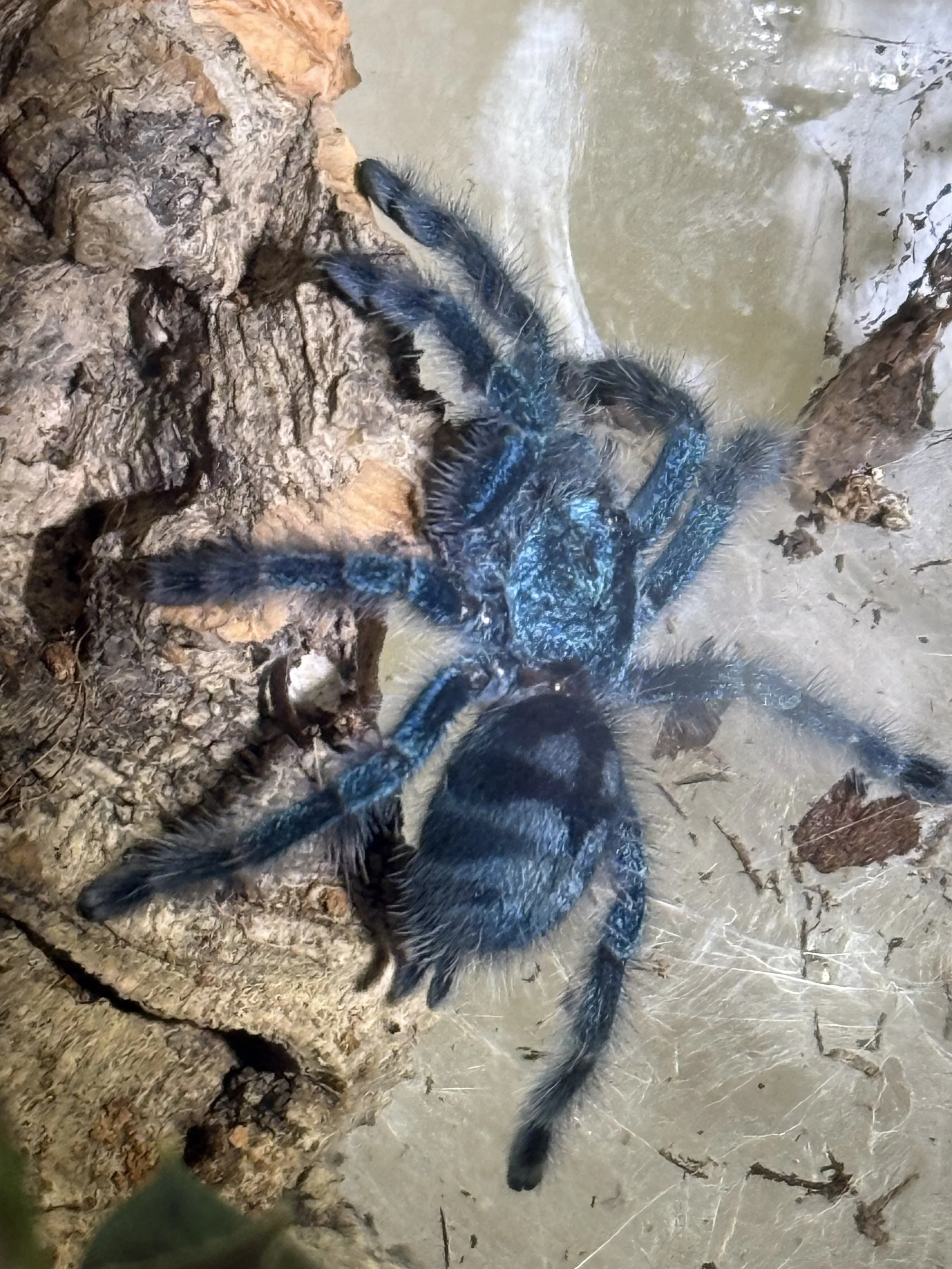
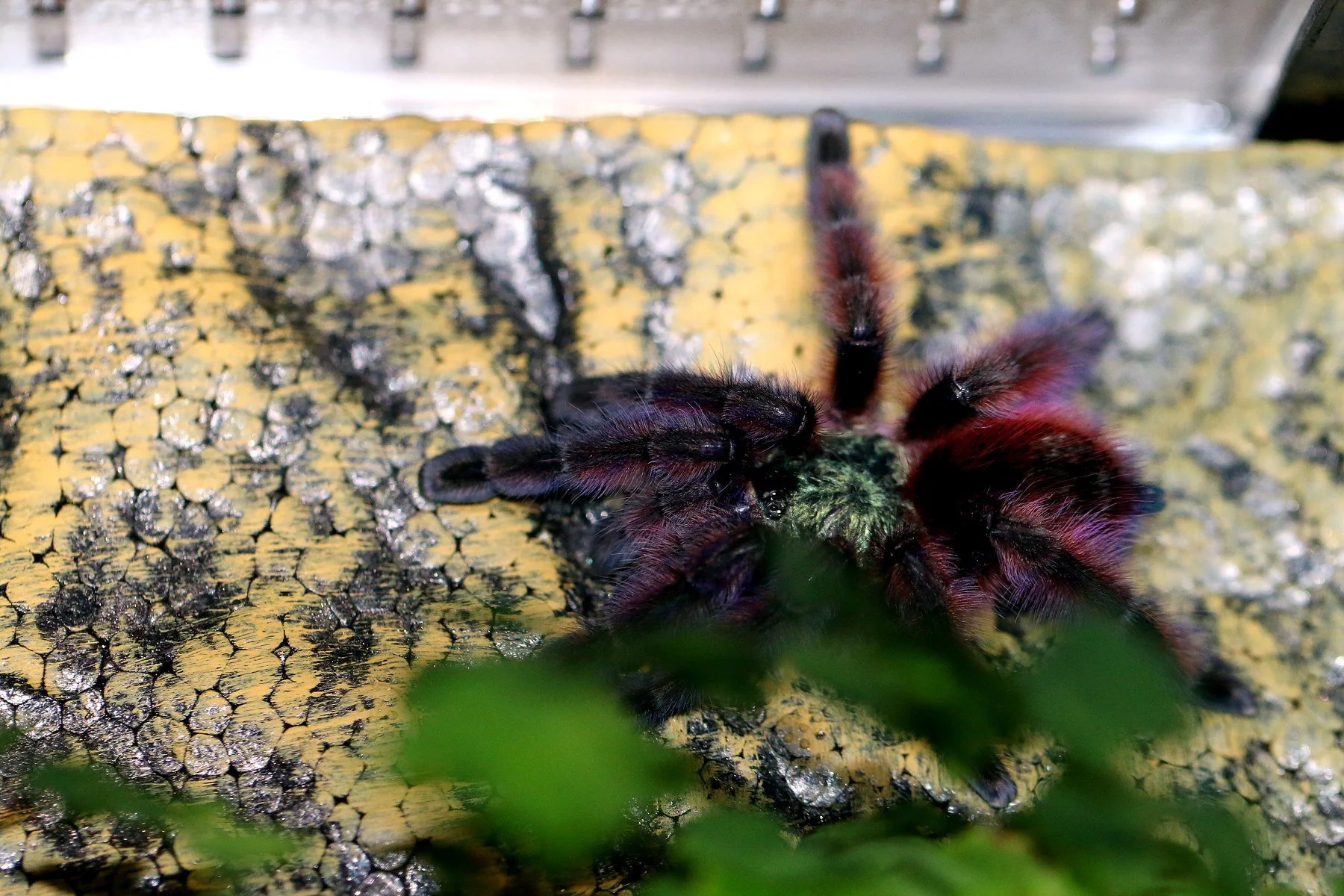
Caribena versicolor in particular has been a fixture of the international arboreal hobby since at least the 1980s and is famous for an unusually dramatic ontogenetic color shift: slings emerge electric blue with a pink opisthosomal accent, transition through metallic green at sub-adult, and arrive at a final adult phenotype of red-violet carapace, blue-green legs, and pale tarsi. The change is more dramatic than that of any other arboreal theraphosid in the hobby and accounts for the species' continued popularity despite restricted island ranges and intermittent supply pressure on captive-bred stock. Conservation pressure on the genus is significant: both Caribena species are restricted to small Caribbean islands, with substantial habitat alteration from tourism development and agriculture, and although neither species is currently CITES-listed, both should be regarded as range-vulnerable. Captive husbandry expects a tall, well-ventilated arboreal enclosure with a vertical cork anchor, mid-70s to low-80s °F, ~70–75% ambient humidity from a moist substrate base, and generous cross-ventilation; the genus does not tolerate stagnant air or sealed lids any better than mainland Avicularia.
Caribena versicolor
Martinique Pink Toe Tarantula
Caribena versicolor (Walckenaer, 1837) is a Neotropical arboreal theraphosid endemic to the Caribbean island of Martinique. Formally reassigned from Avicularia to the newly erected genus Caribena by Fukushima and Bertani in 2017, the species is notable for a pronounced ontogenetic color shift: metallic-blue juveniles progress through green and violet intermediates into adults whose pink, green, and magenta tones arise largely from structural coloration in the setae. In situ it webs heavily in canopy vegetation, constructing tubular silk retreats within bromeliads, palm-leaf axils, and bark crevices, and relies on rapid flight into cover rather than threat display when disturbed.