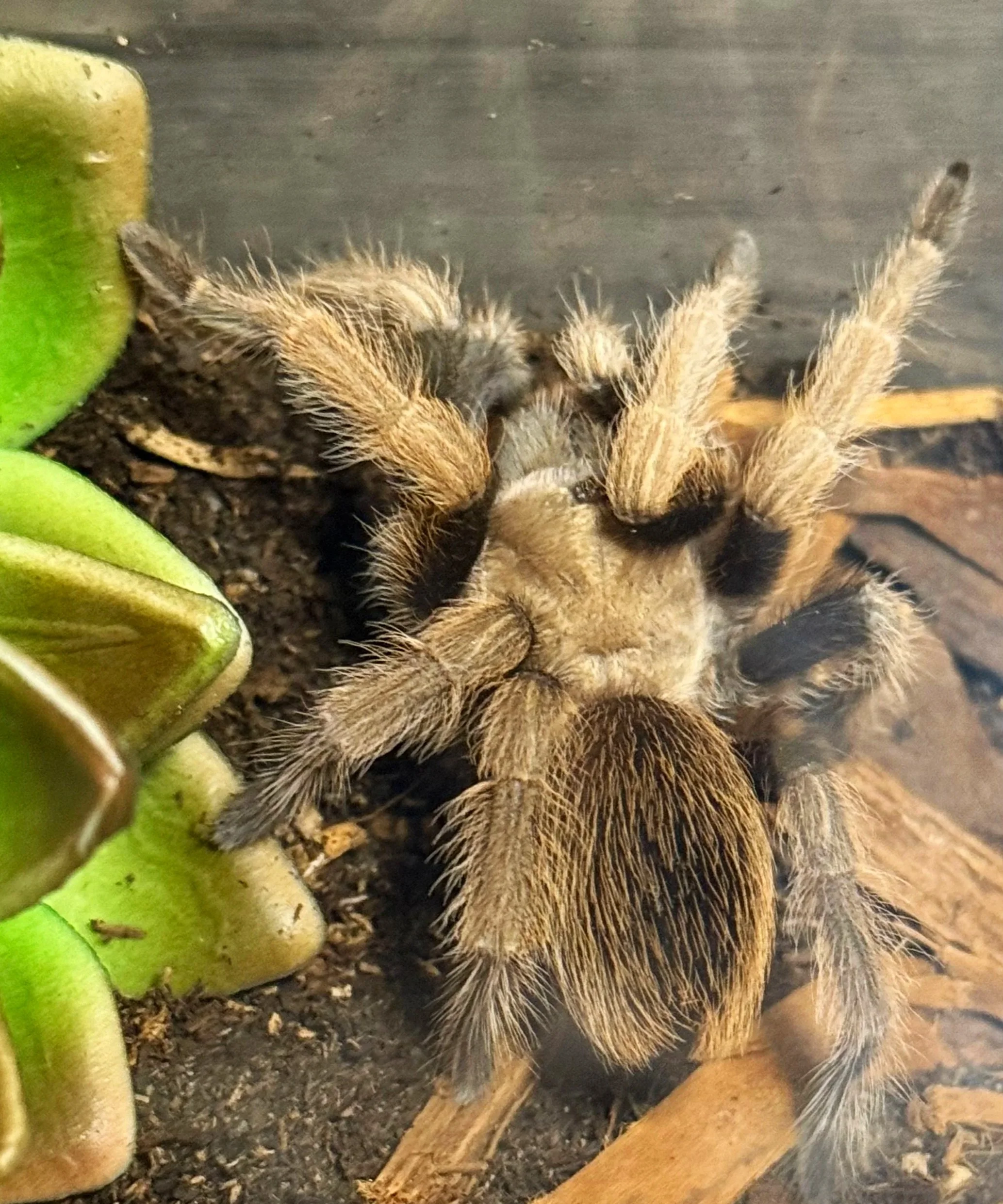
Aphonopelma chalcodes resting on substrate
Species Archive Card

Aphonopelma chalcodes

Arizona Blonde Tarantula

Photo: Luxe Inverts
Field Note

A large-bodied Sonoran Desert tarantula known for its pale blond coloration, calm demeanor, and strongly burrow-centered lifestyle. In captivity, it often favors stillness, a secure retreat, and quiet evening activity around the burrow entrance.
Origin
Southern Arizona and adjacent northern Mexico
Lifestyle
New World terrestrial, fossorial burrower
Adult Size
Typically around 5–6 in / 13–15 cm diagonal leg span
Difficulty
Easy
Temperament
Usually calm, deliberate, and retreat-oriented rather than defensive
Natural Habitat
Arid scrub, desert grasslands, foothills, and silk-lined burrows in well-draining desert soil
Calm species Slow grower Terrestrial burrower Sonoran Desert
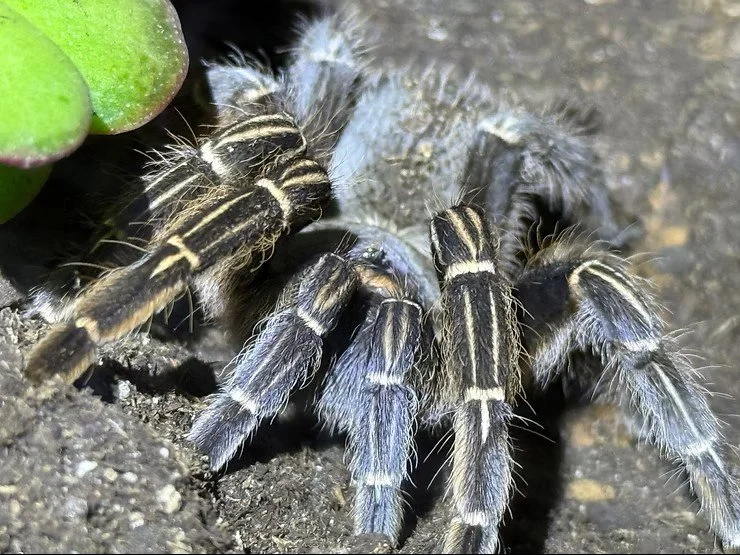
Aphonopelma seemanni in substrate near a burrow entrance
Species Archive Card

Aphonopelma seemanni

Costa Rican Zebra Tarantula

Photo: Luxe Inverts
Field Note

A striking Central American tarantula recognized for its dark base color and bold pale striping. In captivity, it is best known as a deep-burrowing New World species that spends much of the day underground and prefers to retreat quickly rather than stand its ground.
Origin
Costa Rica, Nicaragua, Honduras, and nearby Central American localities
Lifestyle
New World terrestrial, fossorial burrower that builds deep silk-lined tunnels
Adult Size
Typically around 4.5–5.5 in / 11–14 cm diagonal leg span
Difficulty
Easy
Temperament
Usually shy and skittish; most individuals prefer to bolt to the burrow rather than defend
Natural Habitat
Seasonally dry tropical forest, semi-arid scrub, grassland, forest edge, and disturbed ground suitable for burrowing
Deep burrower Striped species New World Central America
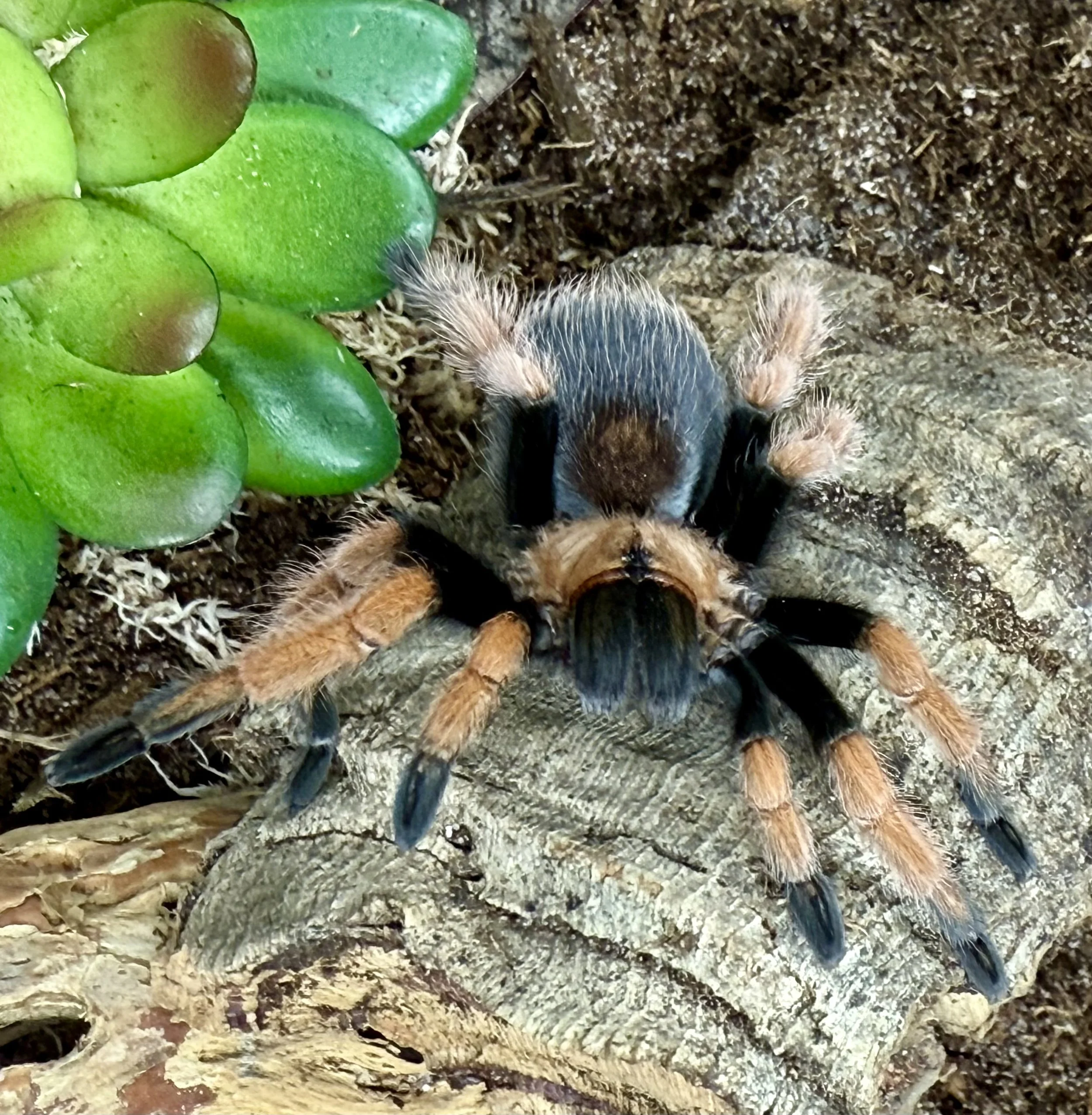
Aphonopelma bicoloratum on bark beside green succulent foliage
Species Archive Card

Aphonopelma bicoloratum

Mexican Blood Leg Tarantula

Photo: Luxe Inverts
Field Note

A vividly colored Mexican Aphonopelma with warm orange-red legs, a dark body, and the calm, burrow-oriented habits that make this genus so appealing in captivity. Juveniles can be a bit more retreat-driven, but established specimens make striking display animals.

Origin
Sonora, Mexico
Lifestyle
New World terrestrial, burrow-oriented tarantula
Adult Size
Approximately 5 in / 12 cm diagonal leg span
Difficulty
Easy
Temperament
Generally calm and docile; juveniles are often more skittish and retreat-first
Natural Habitat
Dry scrub habitat with well-draining soil and burrowing opportunities
Mexican species Colorful display New World Burrower