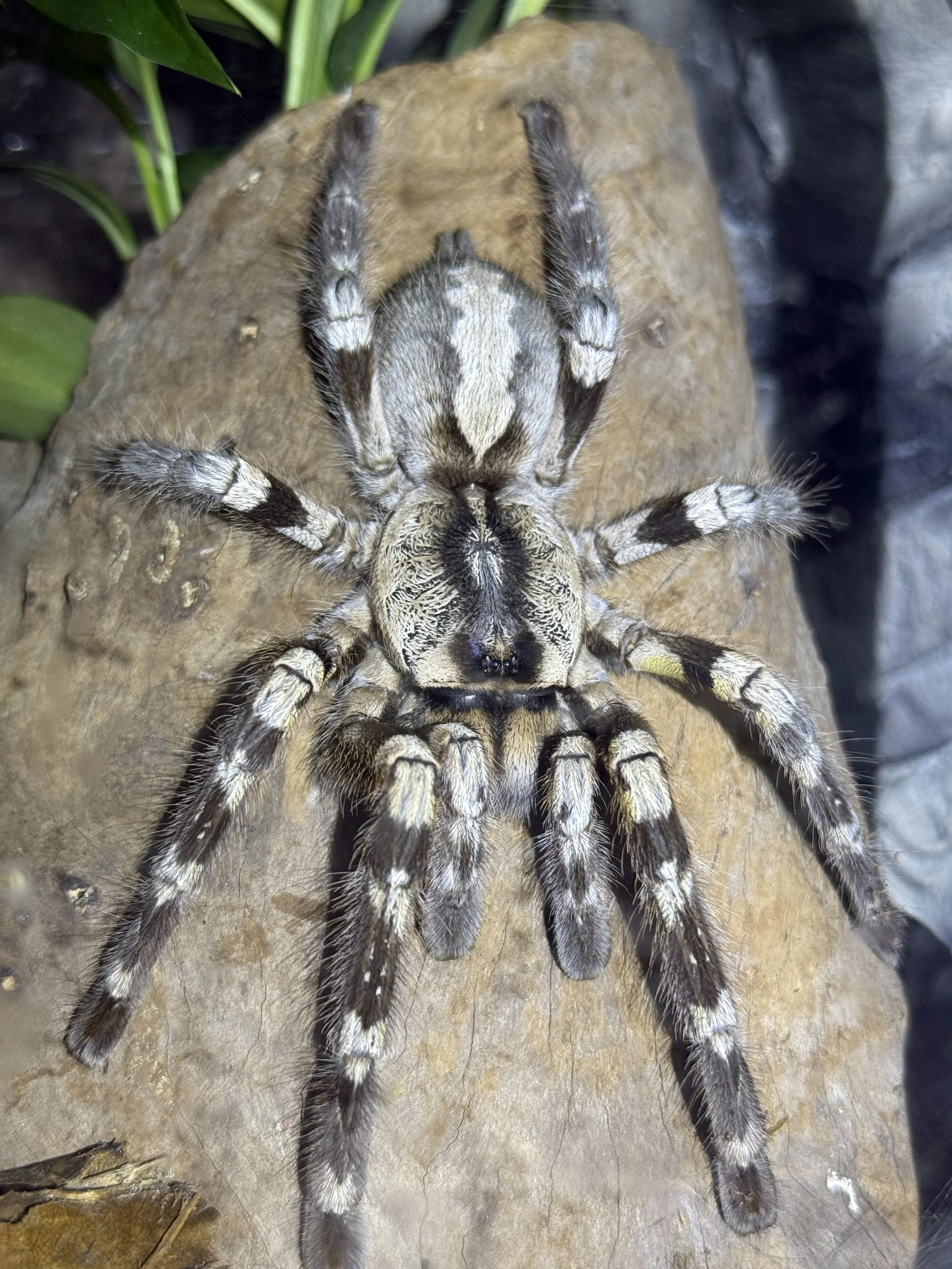
Poecilotheria regalis on bark with patterned legs visible
Species Archive Card

Poecilotheria regalis

Indian Ornamental Tarantula

Photo: Luxe Inverts
Field Note

A large, high-contrast Old World arboreal admired for its bold black, cream, and yellow patterning and its fast, vertical retreat behavior. In captivity, it is best approached as a tree-hollow specialist that relies on height, bark shelters, and rapid movement rather than ground cover or open display.
Origin
India — widely cited from the Ghats region of southern to southeastern India
Lifestyle
Old World arboreal theraphosid
Adult Size
Approximately 7–8 in DLS
Difficulty
Advanced
Temperament
Fast, reactive, and best treated as a defensive Old World arboreal
Natural Habitat
Forested arboreal microhabitats, especially tree hollows, bark crevices, and other vertical retreats in humid woodland
Old World Arboreal India High-contrast patterning
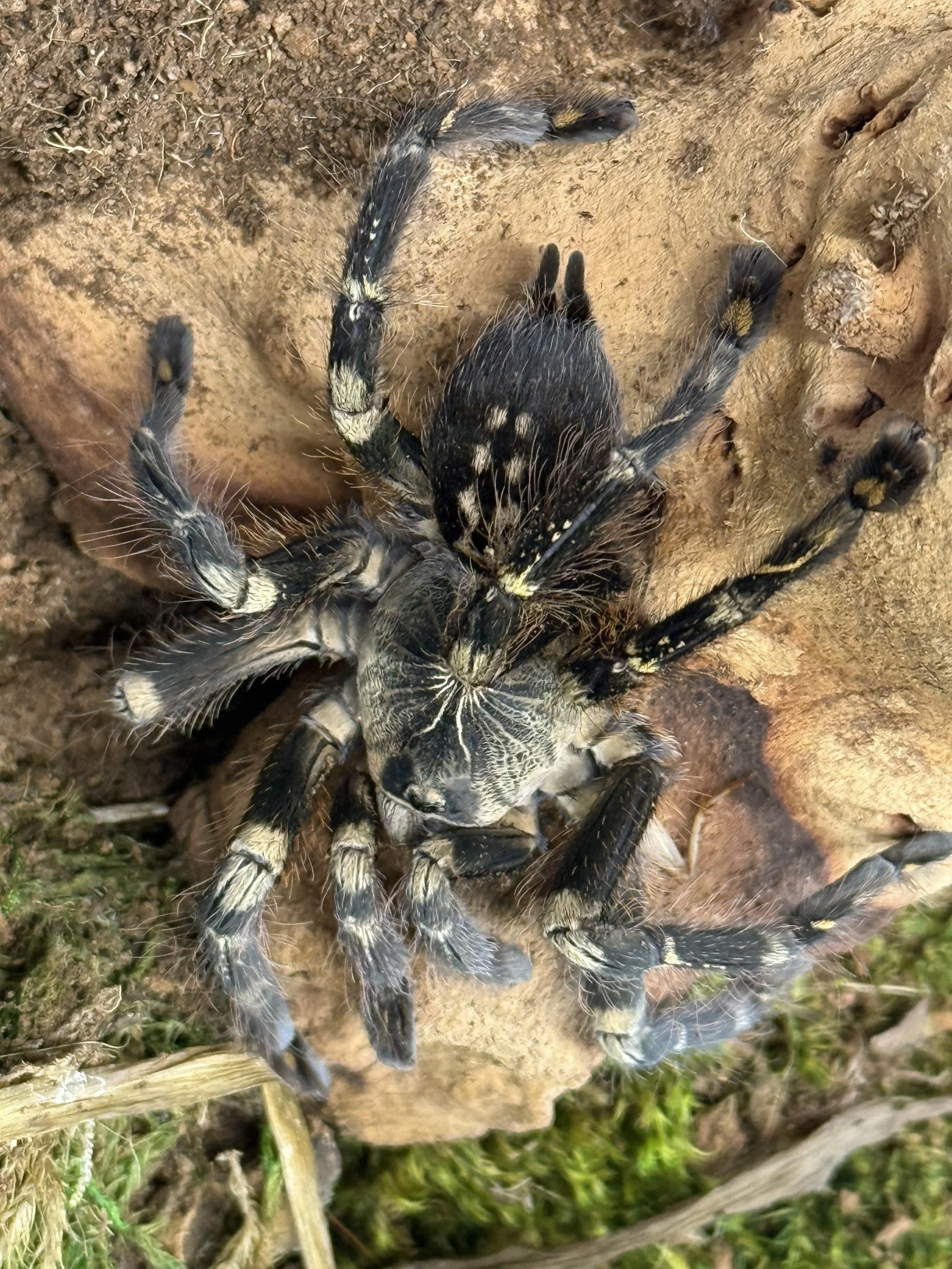
Poecilotheria subfusca lowland on bark
Species Archive Card

Poecilotheria subfusca

Ivory Ornamental Tarantula — lowland form

Photo: Luxe Inverts
Field Note

A striking Sri Lankan ornamental known in the hobby for its lowland and highland forms, with the lowland form often described as darker, more contrast-heavy, and potentially larger in legspan. In captivity, it should be treated as a fast, vertical Old World species that depends on secure bark retreats, height, airflow, and minimal disturbance.

Origin
Sri Lanka — hobby references place the lowland form in lower-elevation forest regions
Lifestyle
Old World arboreal theraphosid
Adult Size
Approximately 8 in DLS for the lowland form
Difficulty
Advanced
Temperament
Fast, reactive, and best treated as a defensive Old World arboreal
Natural Habitat
Humid forest microhabitats with tree hollows, bark crevices, dense foliage, and elevated webbed retreats
Old World Arboreal Sri Lanka Lowland form