Grammostola
Grammostola is a South American tarantula genus established by French arachnologist Eugène Louis Simon in 1892. Today, around 20 recognized species are known from temperate and subtropical regions of Argentina, Bolivia, Brazil, Chile, Paraguay, and Uruguay, including several of the hobby’s most iconic “beginner” tarantulas such as G. rosea, G. pulchra, and G. pulchripes.
In the late 19th century, many South American tarantulas were being described and shuffled between genera. Simon erected Grammostola in 1892 to group a set of robust, ground-dwelling species with similar morphology, later designating Grammostola pulchripes (then described in 1891) as the type species. Over time, several older names and “mini-genera” (such as Lasiocnemus, Lasiopelma, Polyspina, Polyspinosa, and Sorata) were synonymized into Grammostola as taxonomists realized they were describing the same lineage under different labels.
Early descriptions were often brief and based on a handful of visible characters like color and size. For relatively uniform spiders like Grammostola, this led to a tangle of names and misidentifications—especially among Brazilian and Chilean species—because key diagnostic features (such as the shape of spermathecae and male palpal bulbs) weren’t described in detail. Modern authors have highlighted that this “morphological homogeneity” created long-standing confusion in the genus.
From the mid-20th century onward, large regional works and hobby literature tried to sort things out, but some names became entrenched in the pet trade even as scientific views shifted. A classic example is the Chilean rose group: names like G. spatulata, G. cala, and G. porteri circulated for decades before recent taxonomic revisions clarified the situation and synonymized several of these with Grammostola rosea, while also updating distributions of Chilean species.
In the 2000s and 2010s, researchers began using an integrative approach—combining detailed morphology, cladistic analyses, and distribution data—to clean up more than a century of accumulated confusion. Recent work has refined species boundaries (for example in G. pulchra and other Argentine and Brazilian species) and confirmed that Grammostola is a distinct, primarily temperate South American lineage with around twenty valid species as of current catalogs. This ongoing research underpins the names and localities used by breeders and keepers today, linking the spiders on hobby shelves back to over 130 years of taxonomic history.
Grammostola pulcra
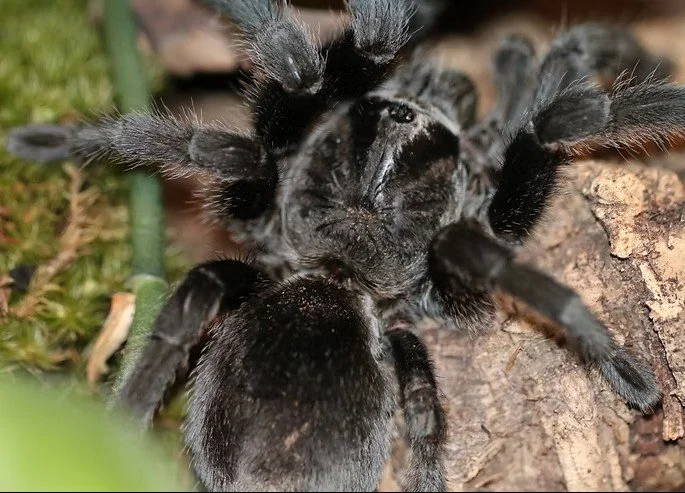
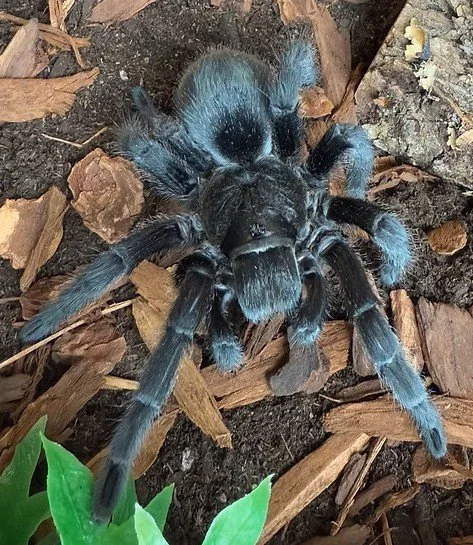
Grammostola pulchra—the Brazilian Black—is one of the most iconic New World tarantulas in the hobby, prized for its deep, uniform velvet-black coloration and its typically calm, unhurried demeanor once established. It’s a terrestrial species that tends to spend much of its time near a favored retreat, emerging to investigate vibrations and prey. When threatened, it usually prefers to retreat or remain still, relying on urticating hairs as a primary defense if it feels pressured.
A major part of its appeal is its “all black” look, which becomes more consistent with maturity and can appear especially rich after fresh molts. While not a “hyper-active” display species, it’s an excellent choice for keepers who appreciate a robust, long-lived tarantula with a steady temperament and striking appearance.
| Common name | Brazilian Black Tarantula |
|---|---|
| Origin | Southern Brazil and Uruguay |
| Natural habitat | Open grasslands and scrubby plains (Pampas-type habitats). Typically uses sheltered ground cover and shallow retreats under rocks, logs, and vegetation, with well-draining soils. |
| Lifestyle | Terrestrial; opportunistic burrower. Prefers a secure hide and may create a shallow burrow/retreat rather than extensive tunneling. |
| Adult size | ~6–7 in (15–18 cm) diagonal leg span (DLS); some may reach ~8 in (20 cm) |
| Growth rate | Slow (typically takes several years to reach maturity) |
| Temperament | Generally calm and docile (“pet rock” behavior). Usually chooses to retreat; may flick urticating hairs if stressed or repeatedly disturbed. |
| Color & appearance | Deep, uniform velvety jet-black as an adult; robust build. Color often looks especially rich and matte after a fresh molt. |
Species History
Original description (1921):
The species was formally described in 1921 by Cândido Firmino de Mello-Leitão, during early work clarifying South American Grammostola.
Mid-century taxonomic reshuffling:
As researchers compared similar-looking Grammostola across South America, the name pulchra was at one point treated as a subspecies (appearing in the literature as Grammostola pulchripes pulchra). This kind of shifting placement was common historically in tarantulas, where closely related species can look very similar externally and early descriptions often lacked the modern level of diagnostic detail.
Modern species delimitation (2016 onward):
In 2016, an integrative taxonomic study in Grammostola described Grammostola quirogai (a very similar “black Grammostola” associated with Uruguay). This helped clarify that not all “Brazilian black” tarantulas circulating in collections under the pulchra label necessarily matched the true Brazilian species concept.
Redescription and range clarification (2023):
A major modern milestone came in 2023, when researchers published a detailed redescription of G. pulchra and added new distribution records, using multiple lines of evidence (morphology plus genetic data). This work strengthened species-level diagnostics and helped stabilize how pulchra is identified and separated from similar regional relatives.
Natural Habitat
Biome and landscape:
Grammostola pulchra is associated with southern Brazil’s grassland and open plain systems (often discussed as campos/pampas-type habitats), where ground conditions range from firm soils to more humid low spots depending on local microclimate. These landscapes are typically open or lightly wooded, with grasses, scrub, and scattered cover.
Microhabitat and shelter use:
In the wild, G. pulchra is a ground-dwelling burrow user. Individuals create or occupy burrows and reinforced soil retreats, often positioned to take advantage of surface cover (vegetation clumps, root zones, fallen material). The burrow functions as a stable refuge from weather swings and predators, and as an ambush point for prey moving through the grass and leaf litter.
Our Specimen
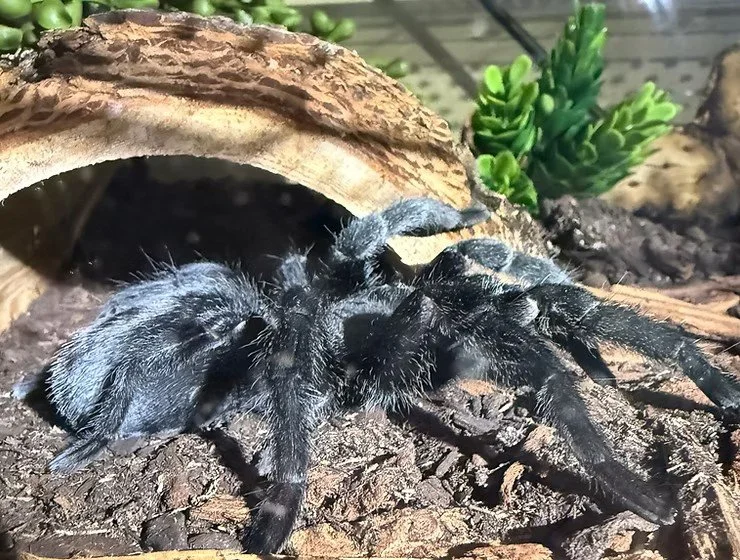
“Celeste” is a family favorite (picture above and below). She has been with us for a long time. She has an engaging, inquisitive, and calm personality. Celeste has been in pre-molt for several months and we are eagerly awaiting her beautiful black coloration again. She is a mature female who is approximately 6 inches.