Brachypelma
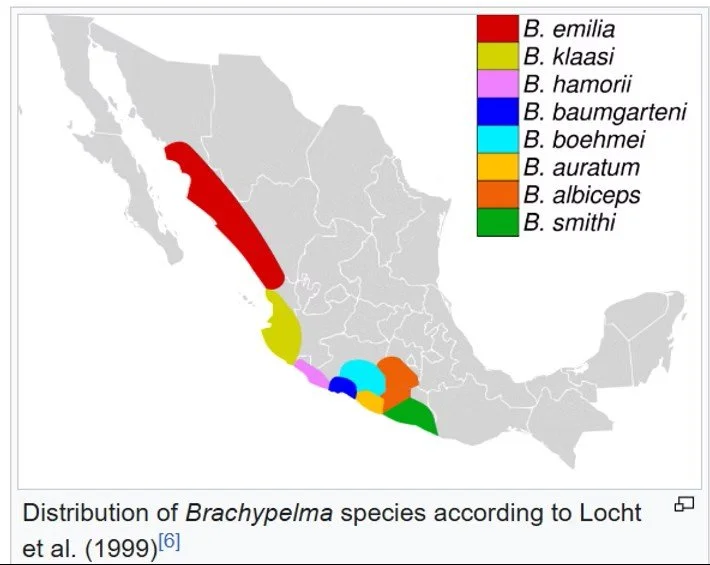
The genus Brachypelma was established in 1891 by French arachnologist Eugène Simon, based on spiders like Mygale emilia (now Brachypelma emilia). These large, ground-dwelling tarantulas from Mexico became famous for their calm temperament and striking red or orange markings on the legs, especially species such as Brachypelma smithi and Brachypelma hamorii.
Through the 20th century, the group’s classification was debated. At different times Brachypelma was treated as a synonym of other genera such as Eurypelma and Euathlus, and several closely related genera (like Brachypelmides) were proposed, then later merged back into Brachypelma as more comparative work was done.
In the 1980s and 1990s, heavy collection for the pet trade led to international protection. Brachypelma smithi was added to CITES Appendix II in 1985, and by 1994 all Brachypelma species were listed, making them some of the few invertebrates with strict export controls.
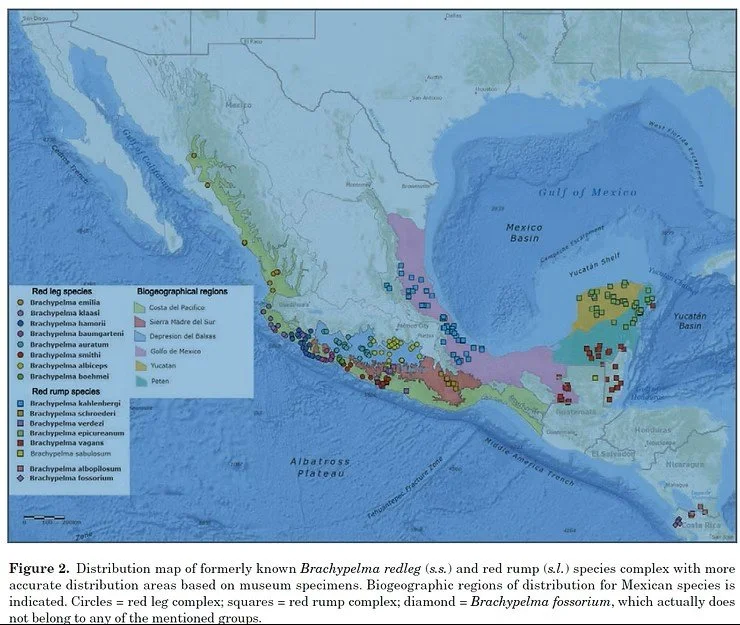
Modern molecular and morphological studies showed that “classic” Brachypelma was actually made up of two distinct lineages. In a 2019/2020 revision, Jorge Mendoza and Oscar Francke officially split the genus in two: the red-legged species (such as B. hamorii, B. smithi, B. boehmei, B. emilia, B. albiceps, etc.) remained in Brachypelma, while the “red-rump” species (like vagans and albopilosum) were transferred to a new genus, Tliltocatl.
Today, Brachypelma is a smaller, Mexican-endemic genus focused on the iconic red-leg tarantulas. All species are still covered by CITES regulations, and continued captive breeding and habitat protection are essential to secure their future in the wild.