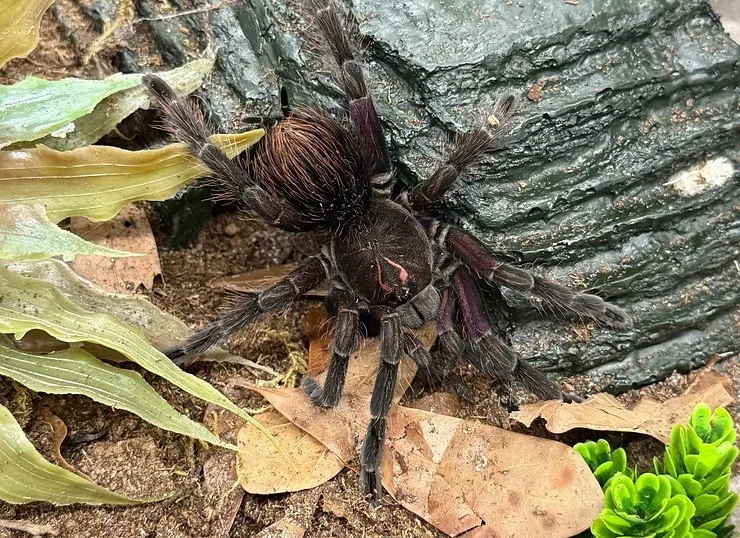
Pamphobeteus
Pamphobeteus is a South American tarantula genus formally established by British arachnologist Reginald Innes Pocock in 1901, originally as part of the old “Aviculariidae” group of New World tarantulas. As spider classification was refined through the 20th century, Pamphobeteus was moved into the modern family Theraphosidae, where it now sits as a distinct genus of large, ground-dwelling tarantulas.
These spiders quickly drew attention because of their impressive size and striking juvenile and adult coloration. Several species are among the largest terrestrial tarantulas known, with robust bodies and legspans that can exceed 16 cm (6+ inches). The genus is widespread across the tropical forests and foothills of western and northern South America, including Colombia, Ecuador, Peru, Bolivia, Brazil and Panama. Over the last few decades, detailed taxonomic work has continued to reshape the group: multiple new species have been described in the 2000s–2020s, and some names familiar in the hobby (such as the former Pamphobeteus petersi) have been reassigned to other genera after closer study.
Today, Pamphobeteus is recognized as a diverse and still-growing genus. Ongoing research continues to refine species boundaries and distributions, while the hobby side has embraced these spiders for their size, growth rate, and bold colors. For keepers, they represent a classic lineage of “giant birdeaters” with a well-documented scientific history and an active modern research spotlight.