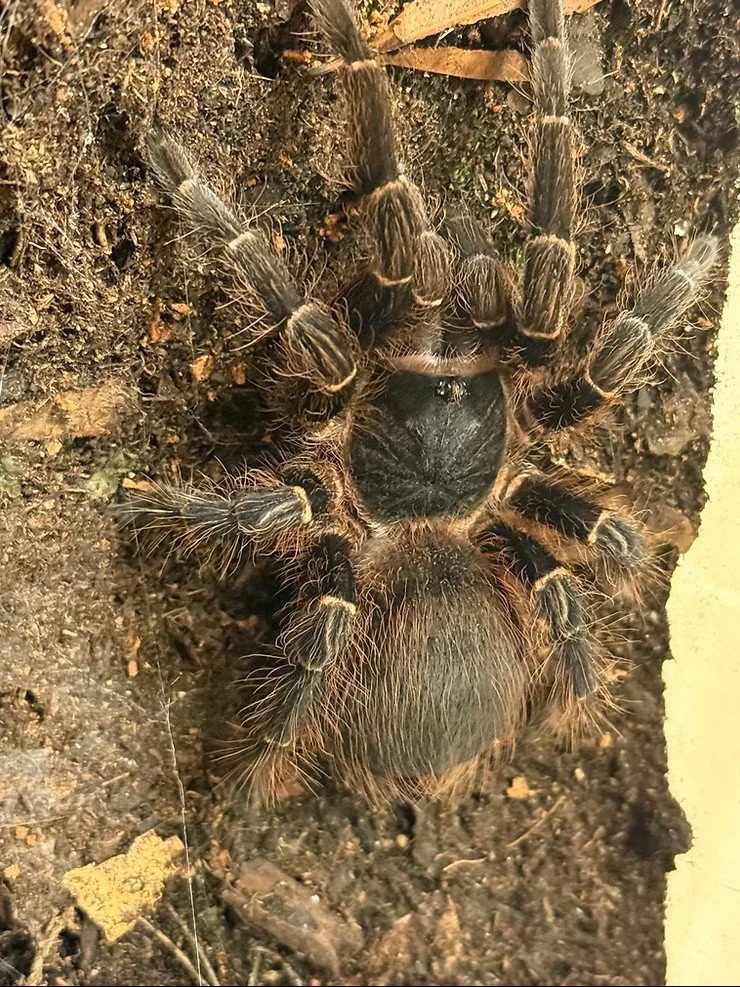
Acanthoscurria
The genus Acanthoscurria was established in 1871 by Austrian arachnologist Anton Ausserer. Its most famous member, Acanthoscurria geniculata, was actually described earlier, in 1841, and later became the type species for the group. In the 19th and early 20th centuries, many large South American tarantulas were shuffled between several now-obsolete genera before being brought together under Acanthoscurria.
Today, Acanthoscurria includes more than thirty recognized species spread across much of tropical South America, where they live as robust, ground-dwelling spiders in forest floors, leaf litter, and shallow burrows. Over the last few decades, taxonomists have revisited the group, synonymizing old names, describing new species, and resolving long-standing mix-ups in the hobby—most famously the “A. brocklehursti” name, which is often applied in the pet trade to banded forms of A. geniculata rather than to the original scientific species.
We follow the current World Spider Catalog and recent revisions to ensure that all Acanthoscurria are correctly identified (at least until the next revision).
Acanthoscurria geniculata
Common name: Brazilian Whiteknee
Origin: Northern Brazil, Amazon basin
Lifestyle: Terrestrial, burrowing, nocturnal
Adult size:
Females: 7–8"+ (18–20 cm) legspan
Males: Slightly smaller, more slender
Growth rate: Fast – reaches maturity in a few years with good feeding
Temperament:
Food-aggressive and bold at the burrow entrance
Can be defensive; not recommended as a first tarantula
Color & appearance:
Deep brown to black body
Striking bright white bands on leg joints (“white knees”)
Heavy, robust build with dense abdominal urticating hairs
Species History
Acanthoscurria geniculata was first described in 1841 by C. L. Koch under the name Mygale geniculata, based on material from Brazil. As tarantula taxonomy developed in the 19th century, the species was briefly placed in the now-defunct genus Scurria before being transferred into Acanthoscurria when that genus was erected by Ausserer later in the century. It is now recognized as the type species of Acanthoscurria and one of the best-known theraphosids from northern Brazil’s Amazon basin.
Over time, a few names that were once thought to represent separate spiders have been folded into A. geniculata. For example, Acanthoscurria transamazonica was later shown to be the same species and is now treated as a junior synonym, helping to stabilize the name used in both science and the hobby.
In the pet trade, A. geniculata—the “Brazilian Whiteknee” or “Giant White Knee”—rose from a rare, high-priced import to a staple species thanks to large, successful captive breedings and its impressive size and coloration.
Today it is one of the most widely kept South American terrestrials, and modern resources such as the World Spider Catalog continue to list A. geniculata as a well-defined, valid species with a firmly established identity.
This species hails from the Amazon basin of northern Brazil. They are a large-sized tarantula that can reach upwards of 9 inches. Many collectors suggest this species has a very fast growth rate. They are commonly collected in the hobby. They are known to be somewhat defensive and frequently kick urticating hairs. The A. geniculata has an unmistakable appearance with a black body and white striped legs.
Natural Habitat
In the wild, Acanthoscurria geniculata is found in the Amazon basin of northern Brazil, where it lives in warm, humid tropical forests. These tarantulas are ground-dwelling burrowers, spending most of their time in shallow tunnels, under roots, rocks, and fallen logs, or in cavities in rotten wood, often lined with silk. They inhabit rainforest and other forested habitats with abundant rainfall and little true dry season, where temperatures are typically in the mid-20s °C (mid-70s to low-80s °F) and humidity is consistently high. Mostly crepuscular to nocturnal, they emerge after dark to hunt in the leaf litter for insects and other invertebrates, retreating to their burrows during the heat of the day.
Our Specimen
Given name: Marge
Sex: Female
Life Stage: Adult
Approximately 8 inches
Always out on display. Hair kicker.
Recently molted (Nov 15, 2025)
Aggressive eater
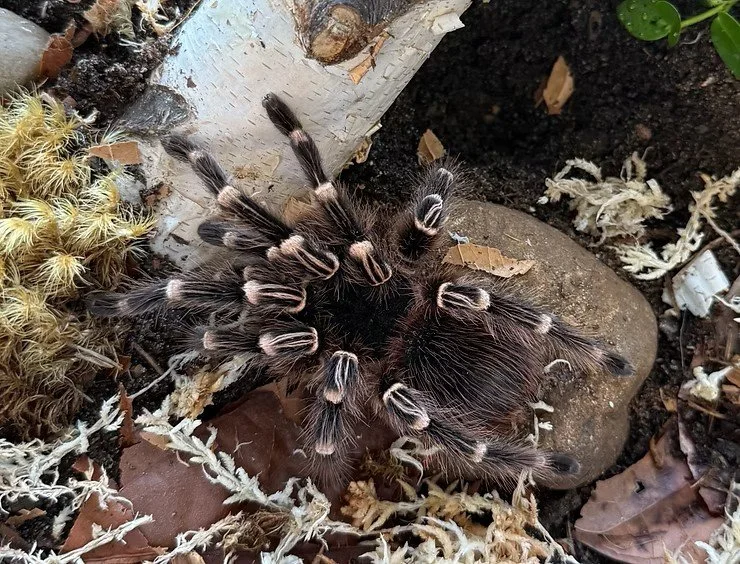
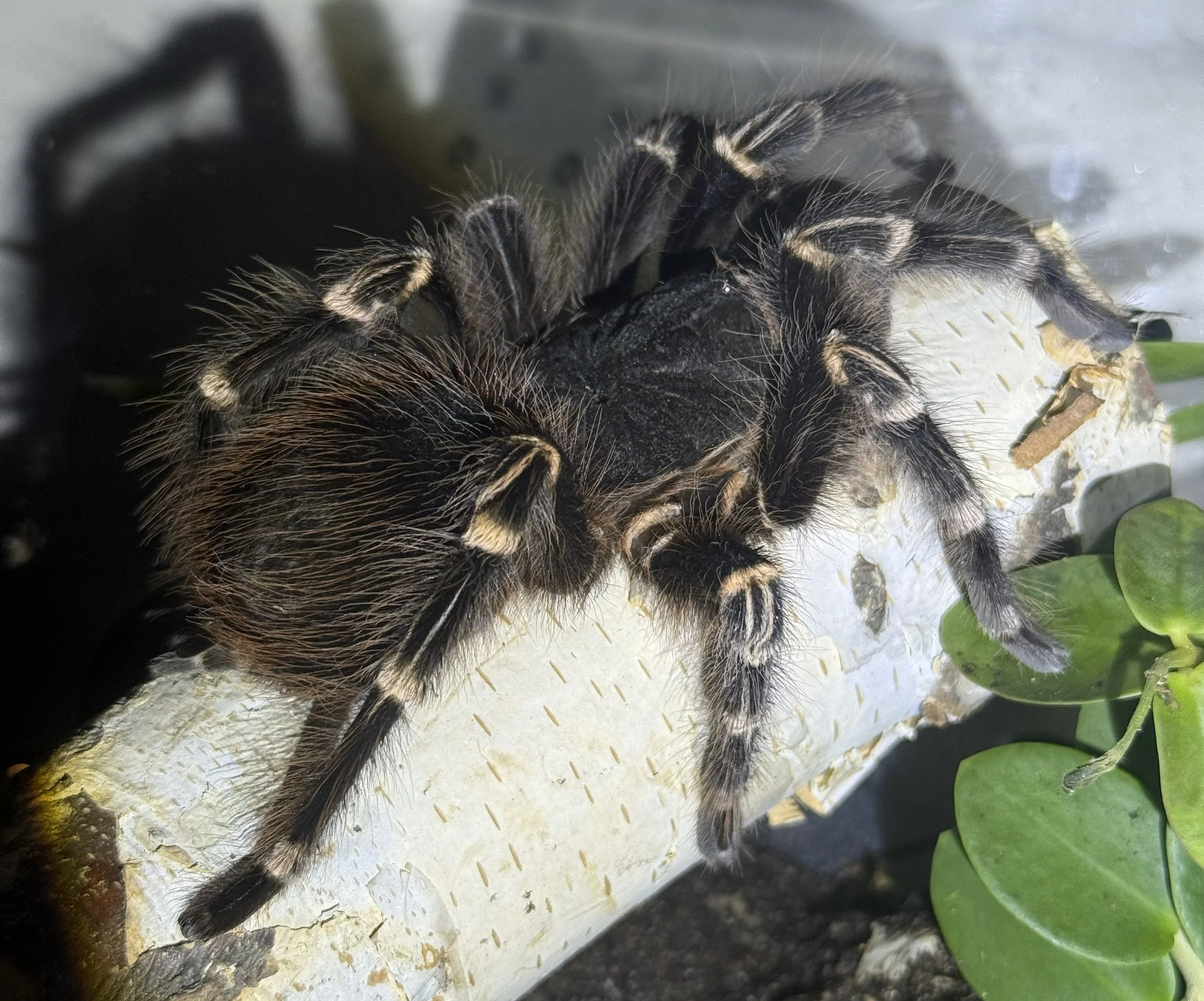
Acanthoscurria musculosa
Common name: Brazilian Black Velvet Tarantula
Origin: Brazil (New World terrestrial tarantula from forest/savanna-type habitats)
Lifestyle: Ground-dwelling, opportunistic burrower; spends a lot of time out, but will use a burrow/hide.
Adult size: Stocky medium-large tarantula, commonly around 5–7" diagonal leg span.
Growth rate: Moderate to fast for a New World terrestrial; slings put on size quickly under regular feeding (similar to other Acanthoscurria like A. geniculata).
Temperament: Bold and often defensive—big feeding response, frequent threat postures, and ready to kick hairs; best viewed, not handled.
Color & appearance:
Overall deep black to very dark brown “velvety” body
Contrasting pale to tan bands on the legs and patellae, giving a high-contrast, black-and-cream look
Very thick, robust build typical of Acanthoscurria species
Species History
A. musculosa was described by Eugène Simon in 1892 and is currently regarded as the senior synonym of Acanthoscurria sternalis and A. hirsutissimasterni, consolidating several “black velvet” forms under a single species. Acanthoscurria musculosa is a stout, ground-dwelling New World tarantula from southern South America. Stocky proportions, a deep charcoal-to-black body, and a bold, dark abdomen (“black rump”) give this species a heavy, powerful look.
Like many Acanthoscurria, this species is a confident terrestrial that often remains visible but will readily retreat to a hide or burrow if startled. In keeper experience it is usually calm but assertive, with a strong feeding response and a tendency to flick urticating hairs when annoyed; some individuals can be more defensive than others.
Natural Habitat
In the wild, the Brazilian Black Velvet (Acanthoscurria musculosa) is found in parts of central South America, including Bolivia and neighboring regions of Brazil and Argentina. It lives on the forest floor and open woodland edges, where the climate is warm and seasonally humid with a distinct rainy season and drier periods.
This species is a ground-dwelling, opportunistic burrower, usually sheltering in natural cavities, under roots, leaf litter, or shallow self-dug burrows in compact soil. The substrate in these habitats ranges from firm, earthy soil to slightly sandy or loamy ground, often covered with organic debris that helps retain moisture while still offering good drainage and ventilation
Our Specimen
Given name: Onyx
Sex: Undetermined
Life stage: Sub-adult
Approximately 4.5 in
Pretty active and engaging
Consistent eater
Typically out on display
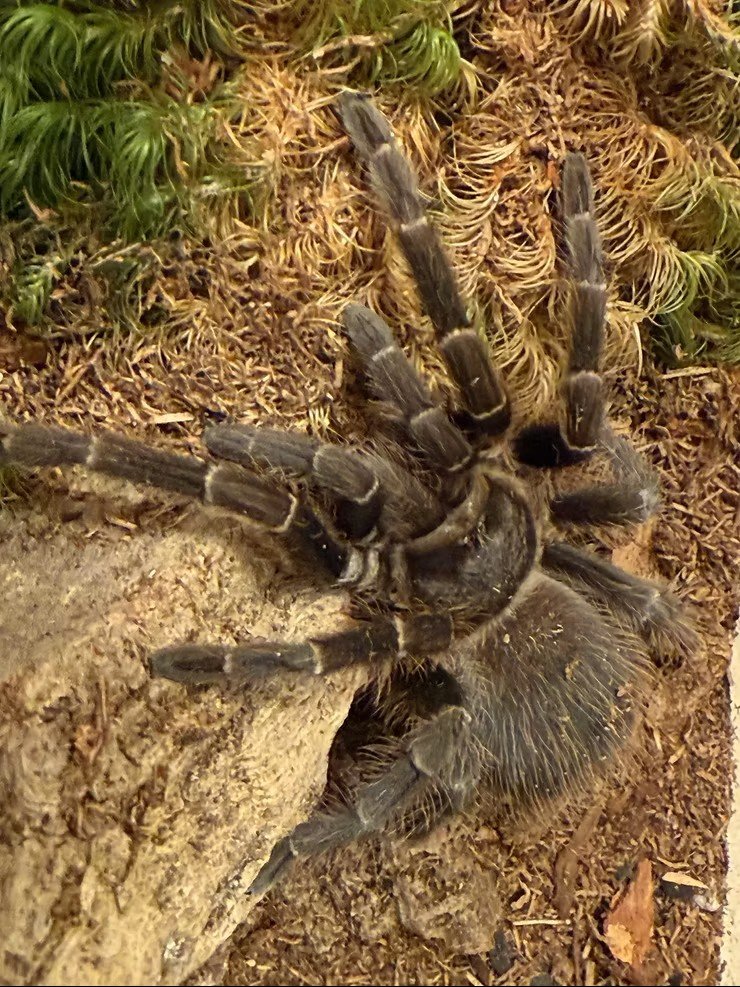
Acanthoscurria sp. Maldonado
Common name: Maldonado birdeater
Origin: Madre de Dios / Puerto Maldonado region, southeastern Peru (Amazon Basin)
Lifestyle: New World terrestrial, opportunistic burrower; forest-floor dweller using hides and shallow burrows
Adult size: Approx. 15–18 cm (6–7") diagonal legspan
Growth rate: Moderate to fast
Temperament: Defensive and prone to kicking urticating hairs; bold feeder with strong feeding response
Color & appearance:
Dark brown to black base
Rich mahogany / reddish tones on carapace and legs
Lighter or orange-tinged banding at the leg joints
Stocky, heavy “birdeater” build suitable as a display terrestrial
Species History
Acanthoscurria sp. “Maldonado” is an undescribed New World terrestrial tarantula circulating in the hobby under the trade name Acanthoscurria maldonadoensis. It is believed to originate from the Madre de Dios / Maldonado region of Peru, a warm, humid lowland rainforest. As with other Acanthoscurria, this is a medium-to-large, fast-growing species with a bold feeding response, making it an impressive display spider for experienced keepers.
In appearance, “Maldonado” shows a dark brown to black base color with warm mahogany tones and lighter banding or striping on the leg joints. This species is an opportunistic burrower, typically using a hide and shallow burrow rather than staying fully arboreal or fully fossorial. Temperament is classic Acanthoscurria: generally visible but defensive and prone to kicking urticating hairs.
Natural Habitat
Acanthoscurria sp. “Maldonado” is believed to originate from the Madre de Dios / Puerto Maldonado region of southeastern Peru, in the foothills of the Amazon Basin. This area is covered in dense lowland rainforest with a warm, humid tropical climate year-round and only a short, slightly cooler dry season. In the wild, related Acanthoscurria species are ground-dwelling spiders of the forest floor, living among roots, leaf litter and fallen logs where the soil stays moist and shaded. They create shallow burrows or occupy natural cavities, using the thick undergrowth and debris for cover while ambushing passing invertebrates and other small prey. Because this population is still undescribed, its exact range and microhabitat are not fully documented, but it is best viewed as a rainforest understory tarantula from a hot, rainy, highly biodiverse Amazonian ecosystem.
Our Specimen:
Given name: Mahogany
Sex: TBD
Life stage: Sub-adult
Approximately 4.5 in
Tends to burrow and vanish
Started as a calm, light-brown specimen; subsequently molted and completely changed appearance and demeanor.