Aphonopelma
Aphonopelma is a genus of New World tarantulas formally established in 1901 by British arachnologist Reginald Pocock, separating these sturdy, ground-dwelling spiders from earlier “catch-all” groups. Native to the southern United States, Mexico, and Central America, Aphonopelma species have become iconic desert and grassland tarantulas.
Throughout the 1900s the group went through several reclassifications and name changes, but in 1991 an international ruling officially fixed Aphonopelma as the correct and conserved name. Modern genetic and morphological studies, including a major revision in 2016, have clarified which species are truly distinct and added many new ones to the genus.
Today, Aphonopelma includes dozens of slow-growing, long-lived terrestrial tarantulas known for their earthy colors, impressive size, and generally calm dispositions—true “backyard giants” of the American Southwest and beyond.miarid scrublands and grasslands, pink-oak forests, rocky foothills, and coastal chaparral.
Aphonopelma chalcodes
Common Name: Arizona Blonde Tarantula
Origin: Sonoran Desert region of southern Arizona, USA, and adjacent northern Mexico.
Lifestyle: Terrestrial, burrowing tarantula from arid scrub and desert grasslands; spends most of the day in a burrow or hide and is most active at dusk and during the night.
Adult Size: Typical body length around 5–6 cm (2–2.5"); legspan usually 12–15 cm (4.5–6").
Growth Rate: Slow-growing species; females often take several years to mature and can live for decades in captivity.
Temperament: Generally calm and tolerant of disturbance; tends to rely on retreating or flicking urticating hairs before resorting to a defensive posture or bite. Widely regarded as a beginner-friendly New World species.
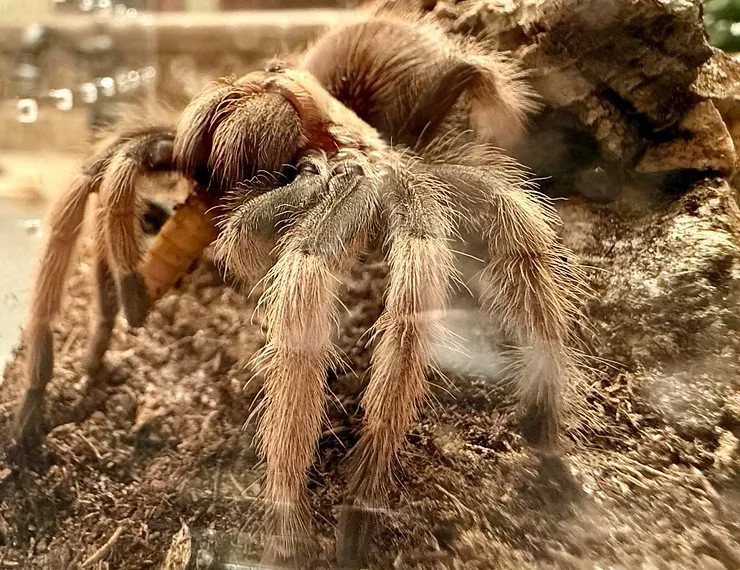
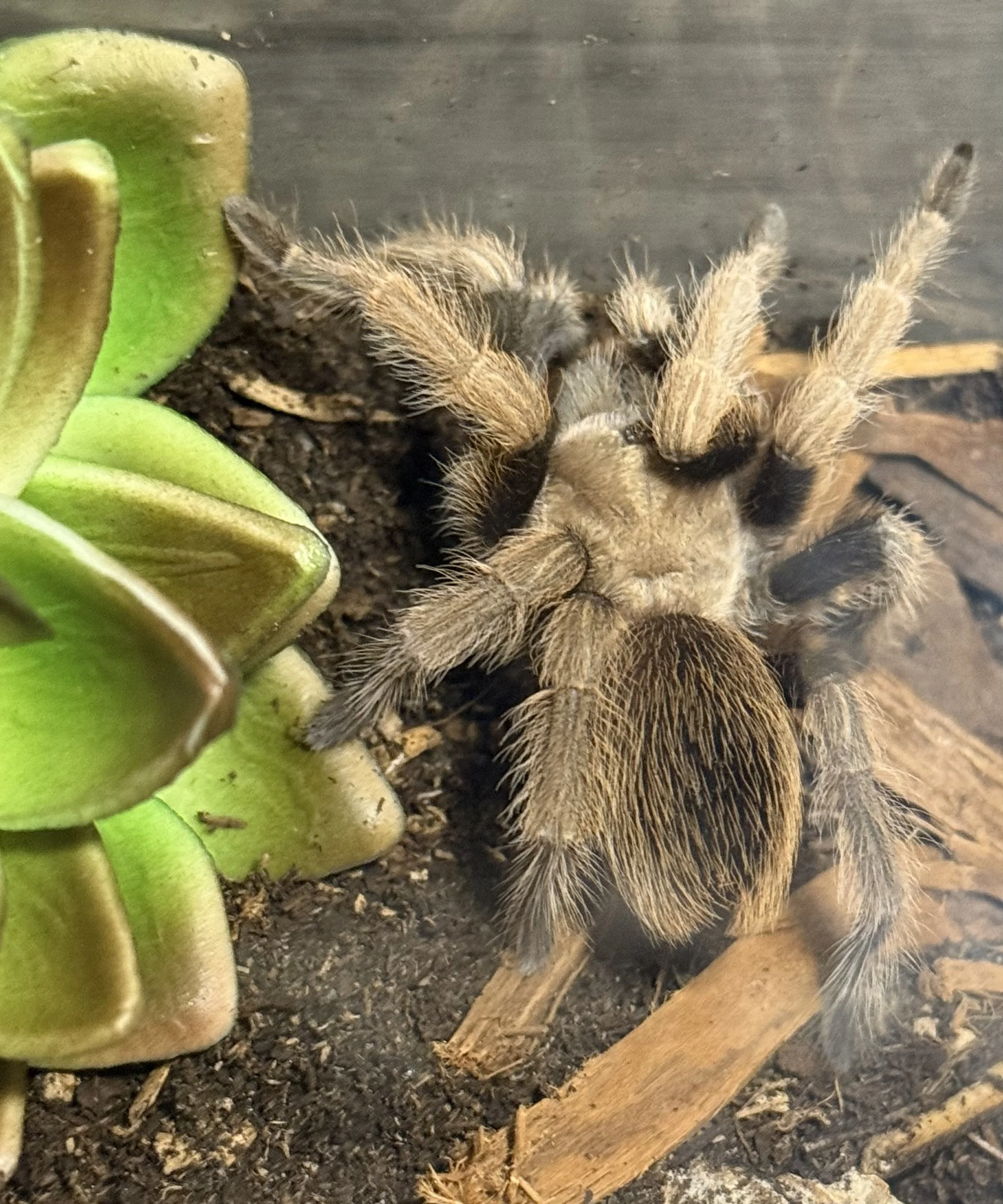
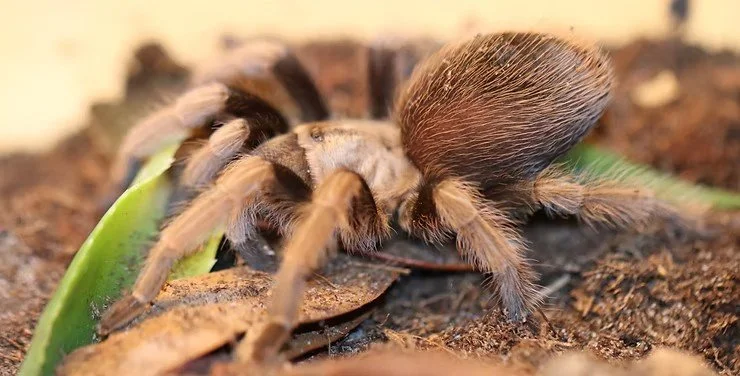
Color & Appearance: Pale blond to tan carapace and legs, often with darker “sock” markings on the femora; medium-brown abdomen with lighter golden hairs, giving a high-contrast “desert blonde” look. Juveniles are typically darker and gradually lighten with age.
Species History
Aphonopelma chalcodes was formally described in 1940 by arachnologist Ralph V. Chamberlin from desert populations in Arizona, USA, in his classic work on New World tarantulas. Today it’s recognized as a valid species in the genus Aphonopelma, with a natural range focused on the Sonoran Desert of southern Arizona and adjacent northern Mexico.
Through the late 20th century, several similar desert tarantulas were described as separate species (Aphonopelma apacheum, A. minchi, A. rothi, A. schmidti, A. stahnkei), often reflecting local color forms such as “New River” or “Flagstaff” blondes. A major 2016 revision of U.S. Aphonopelma used DNA, morphology, and distribution data to show that all of these actually belong to a single, variable species—Aphonopelma chalcodes—and they are now treated as synonyms.
Today, A. chalcodes is one of the best-known North American tarantulas, commonly called the Arizona or desert blonde. With its pale golden carapace, contrasting darker abdomen, gentle temperament, and long lifespan, it has become an iconic “beginner” species in the hobby and an ambassador for the tarantulas of the American Southwest.
Natural Habitat
The Arizona Blonde Tarantula is native to the arid landscapes of the Sonoran Desert and surrounding dry regions in southern Arizona and northern Mexico. It lives in sparsely vegetated desert scrub and saguaro-dominated communities, where summers are extremely hot, winters can be cold, and rainfall is low and highly seasonal.
In this environment, A. chalcodes is a terrestrial burrower, digging or adopting deep burrows in soft, well-draining soil—often under rocks, plant roots, or old rodent holes—to escape predators, conserve moisture, and buffer temperature extremes. Mostly nocturnal, it typically emerges at night or during the summer rains to hunt insects and other small invertebrates on the desert floor.
Our Specimen
Given name: Chai
Sex: Undetermined
Life stage: Sub-adult:
Approximately 4 inches
Generally docile
Always out in the open
Very slow growing
My wife's favorite
Aphonopelma Seemani
Common name: Costa Rican Zebra / Costa Rican Stripe Knee / Striped-knee tarantula
Origin: New World terrestrial species from western Costa Rica and surrounding parts of Central America, including Nicaragua and Honduras, with records also from Guatemala and nearby regions.
Lifestyle: Primarily a terrestrial, fossorial burrower that constructs deep, silk-lined tunnels in open, semi-arid grassland and scrub habitats. In captivity it readily adopts a hide or digs its own burrow and spends much of the day underground.
Adult size: Medium-sized tarantula, typically around 4.5–5.5 in (11–14 cm) diagonal leg span, with some specimens approaching 5–6 in reported in the hobby.
Growth rate: Generally slow to medium growth—not as fast as many arboreals or large South American terrestrials, but steady with regular feeding and warm temperatures.
Temperament: A classic New World species: typically shy and skittish rather than overtly defensive. Most individuals prefer to bolt to their burrow; hair-kicking and bite reports are relatively uncommon, and venom is considered mild, though urticating hairs can be irritating.
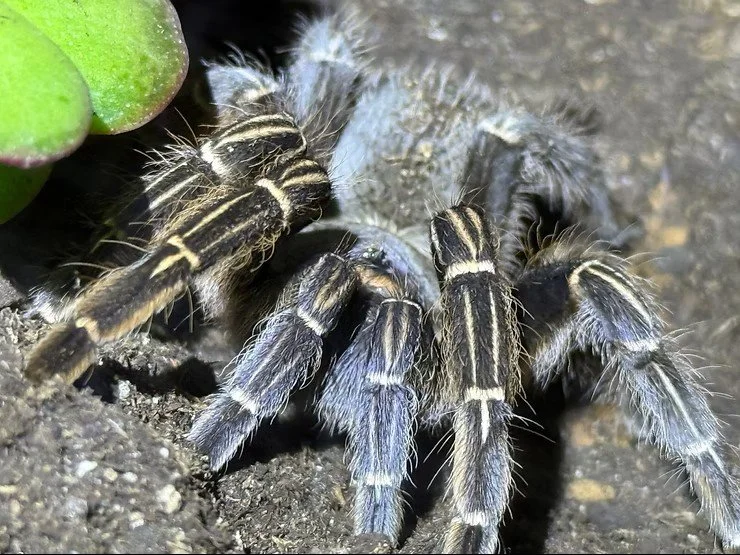
Color & appearance: Striking contrast species with a dark brown to black base color and bold cream to white striping on the knees and along the legs, giving the signature “zebra” look. Freshly molted animals often show subtle bluish or steel tones on the legs and carapace, especially in certain lineages
Species History
Aphonopelma seemanni, commonly known as the Costa Rican Zebra or Striped-knee tarantula, was first described in 1897 by British arachnologist F. O. Pickard-Cambridge, who named it in honor of collector Berthold Seemann after specimens from Puerto Culebra, Costa Rica were deposited in the British Museum.
Originally placed in the broad “catch-all” genus Eurypelma, the species has traveled through a shifting taxonomic landscape as mygalomorph spiders were reclassified throughout the 20th century. Later revisions split Eurypelma into several genera, with Aphonopelma erected in 1901. Subsequent work briefly sank multiple genera into Rhechostica, but due to long-standing usage, the name Aphonopelma was conserved and is now the accepted genus for A. seemanni.
In nature, A. seemanni is a fossorial, deep-burrowing tarantula from the Pacific slopes and dry forests of western Costa Rica, extending northward into Nicaragua, Honduras, and likely Guatemala. These spiders occupy semi-arid scrub, grasslands, and disturbed habitats, where their burrows buffer them from heat and nightly temperature drops.
The striking contrast of dark legs with pale “zebra” striping made A. seemanni one of the earliest Central American tarantulas to gain popularity in the pet trade. By the late 20th century it was firmly established as a hardy, long-lived display species in captivity, with both classic brown and darker, bluish local color forms circulating among hobbyists. Today it remains a staple New World species—valued for its bold patterning, natural burrowing behavior, and role as an ambassador to the diverse Aphonopelma genus of Central and North America.
Natural Habitat
In the wild, Aphonopelma seemanni inhabits the dry forests and open scrublands of western Costa Rica and neighboring parts of Central America, including Nicaragua, Honduras, and possibly Guatemala.
This species is primarily terrestrial and fossorial, living in deep, silk-lined burrows that it excavates in compact, well-drained soil. These burrows act as a buffer against the hot, dry daytime conditions and cooler nights, helping the spider maintain stable temperature and humidity.
In its native range, the climate is warm and seasonally dry, with a pronounced rainy season. A. seemanni is often found along the Pacific slope in lowland to premontane zones, where grassy clearings, forest edges, road banks, and disturbed areas provide ideal ground for burrowing.
Our Specimen:
Given name: Mocha
Sex: Undetermined
Life stage: Sub-adult
Slow grower, reaching adult size
Frequently out in the open and generally docile
Consistent eater
Enjoys digging in the dirt.
Has a beautiful blue hue after its last molt