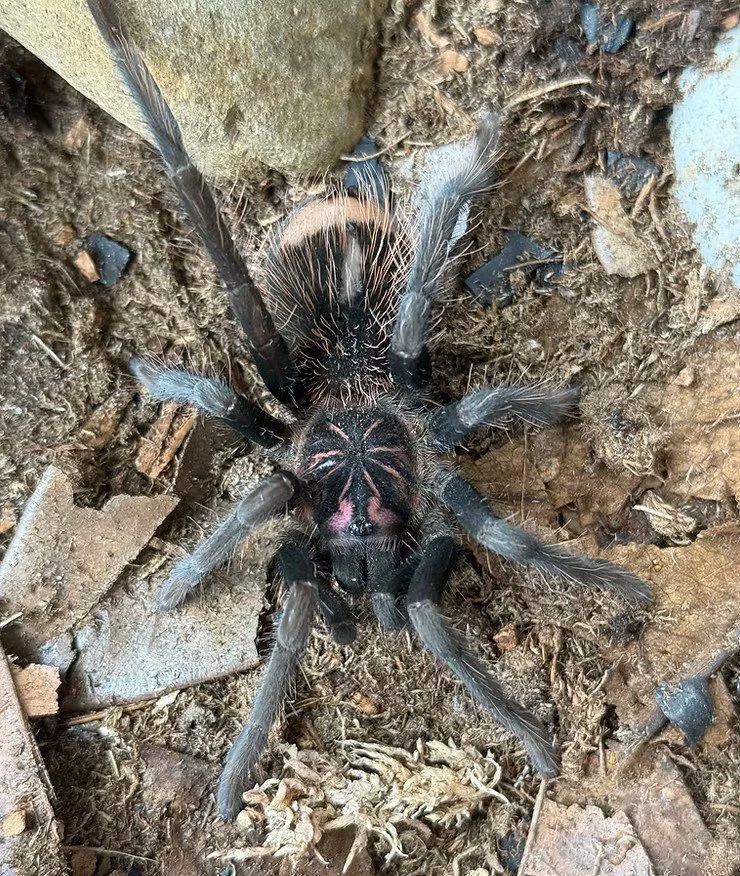
The genus Xenesthis is a group of large New World tarantulas in the family Theraphosidae, first established by French arachnologist Eugène Simon in 1891, with Xenesthis colombiana designated as the type species. These spiders are native to northern South America, with confirmed records from Colombia and Venezuela; earlier reports from Panama were later considered misidentifications.
Xenesthis was originally set apart from other tarantulas by the unusually dense “scopula” (brush of hairs) on the fourth metatarsus, which almost completely covers that segment—at the time a unique feature among New World genera. Over the years, the genus has been refined taxonomically: species such as “Xenesthis cubana” were later removed and placed in other genera (now Citharacanthus spinicrus).
A major modern revision came in 2023, when Sherwood, Gabriel and colleagues re-examined the type material of X. colombiana, X. immanis and X. monstrosa, designated a neotype for X. intermedia (the original type was lost), redescribed the female, and described the male for the first time. They also added a new Venezuelan species, Xenesthis avanzadora, bringing the genus to five accepted species.
Today, the recognized species are: X. avanzadora, X. colombiana, X. immanis, X. intermedia, and X. monstrosa. In the hobby, X. immanis and related forms (including “sp. blue” and other locale names) are especially sought after for their impressive size and striking color contrasts, making Xenesthis one of the standout “showpiece” genera among terrestrial birdeaters.