

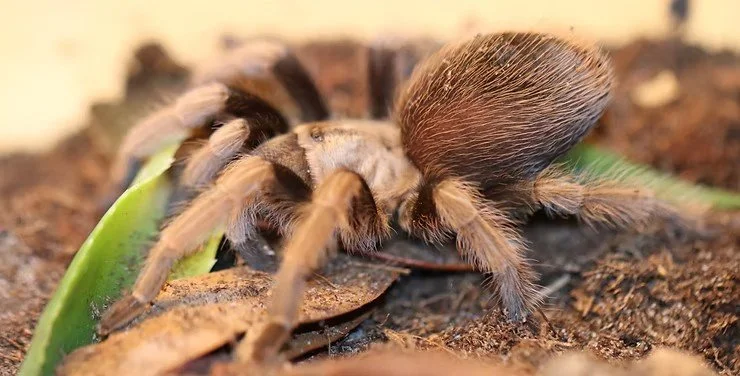
Aphonopelma chalcodes
Aphonopelma chalcodes is an accepted North American theraphosid described by Chamberlin in 1940. It is currently recognized by the World Spider Catalog, and the major 2016 revision of U.S. Aphonopelma synonymized several previously used names under it, including A. apacheum, A. minchi, A. rothi, A. schmidti, and A. stahnkei. The U.S. Fish & Wildlife Service lists its common name as the desert blond tarantula.
This species is best known as a large-bodied, burrowing tarantula of the Sonoran Desert region, especially Arizona and adjacent northern Mexico. It is often noticed during the summer rainy season, when wandering males become more visible above ground. Females are typically pale tan to blond overall, while males are darker, with black legs, a coppery carapace, and a more reddish abdomen. Arizona-Sonora Desert Museum materials describe burrows about 1 to 2 inches in diameter, often lined or edged with silk.
Quick Species Facts
Common Name: Arizona Blonde / Desert Blonde Tarantula
Origin: New World terrestrial species from the Sonoran Desert region of southern Arizona and adjacent northern Mexico, where it is associated with arid scrub, desert grasslands, and foothill habitats.
Lifestyle: A terrestrial, fossorial burrower that spends much of its life in silk-lined underground retreats. In captivity, it readily adopts a hide or establishes a burrow and is typically most active around the entrance in the evening or after environmental changes.
Adult Size: Large New World tarantula, typically around 5–6 in (13–15 cm) diagonal leg span, with mature females often appearing especially heavy-bodied and robust.
Growth Rate: Generally slow growing, especially when compared with many tropical species. Females in particular are long-lived and take time to mature, rewarding patient long-term keeping.
Temperament: Usually calm, deliberate, and retreat-oriented rather than defensive. Many individuals prefer stillness or a slow withdrawal to the burrow, though urticating hairs can still be used if the spider feels pressed.
Color & Appearance: Best known for its pale blond to sandy tan overall appearance, especially in adult females. Mature males are more contrasting, often with darker legs and a warmer coppery or reddish cast to the body, while the species as a whole has the sturdy, understated look typical of North American desert tarantulas.
Species History
Aphonopelma chalcodes was formally described in 1940 by arachnologist Ralph V. Chamberlin from desert populations in Arizona, USA, in his classic work on New World tarantulas. Today it’s recognized as a valid species in the genus Aphonopelma, with a natural range focused on the Sonoran Desert of southern Arizona and adjacent northern Mexico.
Through the late 20th century, several similar desert tarantulas were described as separate species (Aphonopelma apacheum, A. minchi, A. rothi, A. schmidti, A. stahnkei), often reflecting local color forms such as “New River” or “Flagstaff” blondes. A major 2016 revision of U.S. Aphonopelma used DNA, morphology, and distribution data to show that all of these actually belong to a single, variable species—Aphonopelma chalcodes—and they are now treated as synonyms.
Today, A. chalcodes is one of the best-known North American tarantulas, commonly called the Arizona or desert blonde. With its pale golden carapace, contrasting darker abdomen, gentle temperament, and long lifespan, it has become an iconic “beginner” species in the hobby and an ambassador for the tarantulas of the American Southwest.
Natural Habitat
The Arizona Blonde Tarantula is native to the arid landscapes of the Sonoran Desert and surrounding dry regions in southern Arizona and northern Mexico. It lives in sparsely vegetated desert scrub and saguaro-dominated communities, where summers are extremely hot, winters can be cold, and rainfall is low and highly seasonal.
In this environment, A. chalcodes is a terrestrial burrower, digging or adopting deep burrows in soft, well-draining soil—often under rocks, plant roots, or old rodent holes—to escape predators, conserve moisture, and buffer temperature extremes. Mostly nocturnal, it typically emerges at night or during the summer rains to hunt insects and other small invertebrates on the desert floor.
Our Specimen
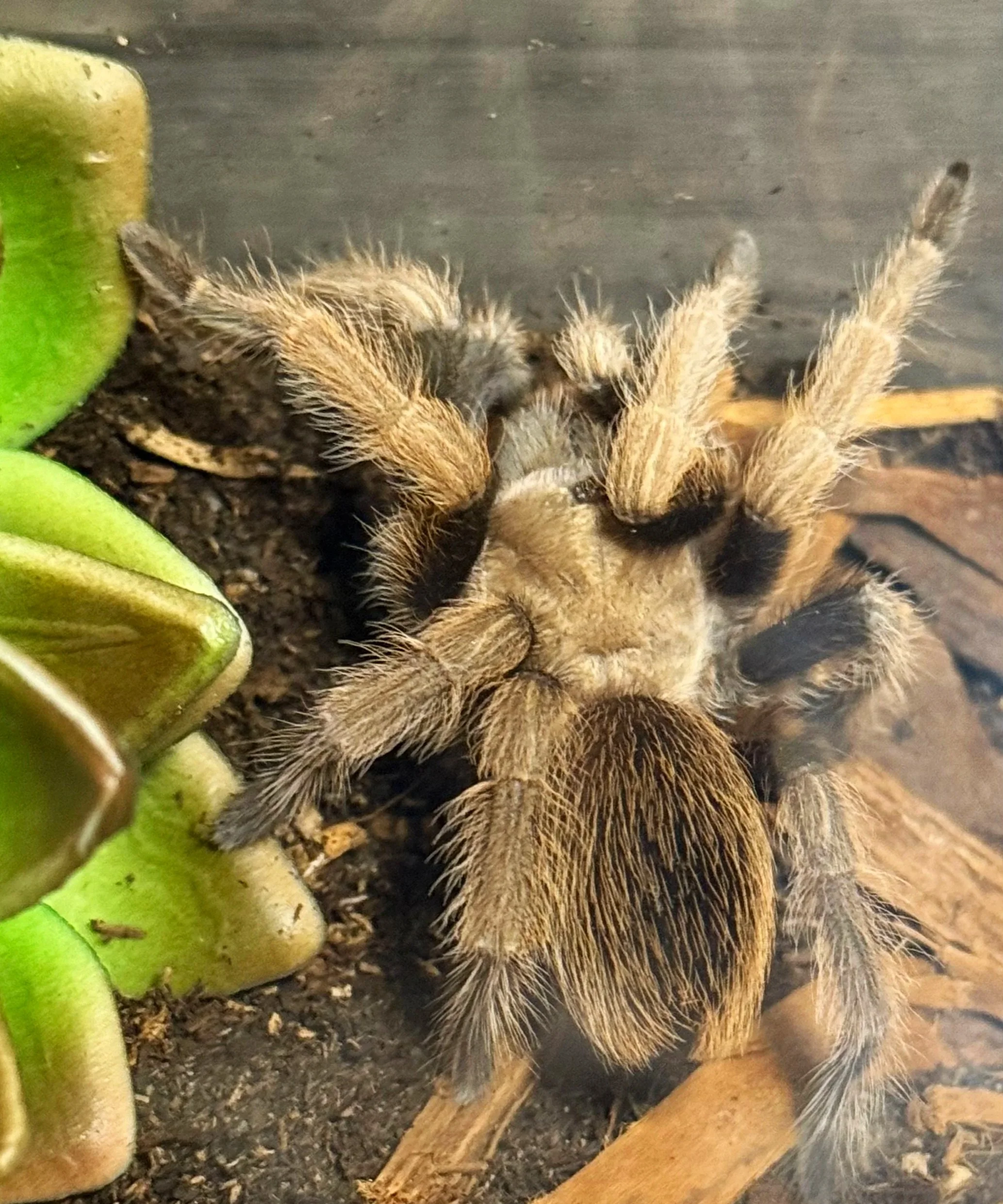
“Chai” is a family favorite (pictured above and below). She is a sub-adult who has been with us for a long time. Chai was the first tarantula that I handled (intentionally). She has a very calm disposition, and is typically out on display.